
Introduction
Traveling the world is a privilege, but it often comes with a heavy environmental footprint. In 2026, conscious tourism is no longer just a trend; it is a responsibility. If you are wondering how to make a zero waste travel kit for beginners, you are already taking the first step toward a cleaner planet. Learning how to make a zero waste travel kit for beginners doesn’t require a massive budget or radical lifestyle changes. In fact, understanding how to make a zero waste travel kit for beginners is about choosing quality over quantity.
Many people feel overwhelmed by the idea of sustainability, but once you master how to make a zero waste travel kit for beginners, you’ll realize it actually makes travel lighter and more organized. This guide will walk you through the essentials of how to make a zero waste travel kit for beginners by focusing on reusable alternatives and smart packing strategies. By the end of this article, you will be an expert on how to make a zero waste travel kit for beginners, ready to explore the globe without leaving a trace of plastic behind.
Why Zero Waste Travel Matters in 2026

With global travel reaching record highs, the amount of single-use plastic generated at airports and hotels is staggering. A zero waste kit helps:
- Reduce Landfill Contributions: Prevents hundreds of plastic bottles and wrappers from entering the ocean.
- Save Money: Investing in reusables means you stop paying for overpriced airport water and travel-sized toiletries.
- Healthier Living: Avoids BPA and microplastics found in disposable containers.
Core Components of Your Eco-Friendly Kit
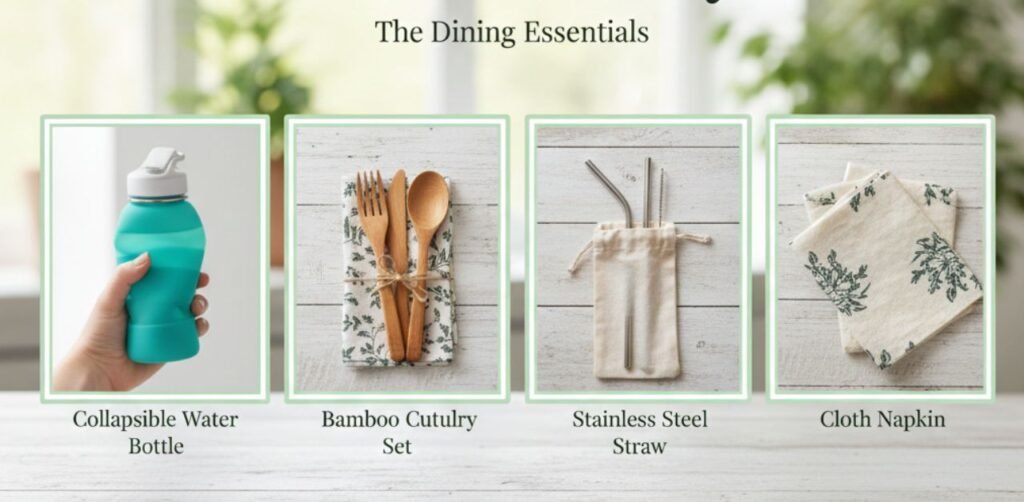
To build your kit effectively, categorize your items into three main zones: Dining, Hygiene, and Organization.
1. The Dining Essentials
The most waste is often created through “on-the-go” eating. Replace disposables with these:
- Collapsible Water Bottle: Saves space in your carry-on and stays with you through security.
- Bamboo Cutlery Set: Lightweight and doesn’t trigger airport security like metal knives might.
- Stainless Steel Straw: Includes a small cleaning brush to avoid soggy paper straws or plastic ones.
- Cloth Napkin: Can be used as a plate, a bag for bread, or simply for cleaning up spills.
2. The Sustainable Washbag
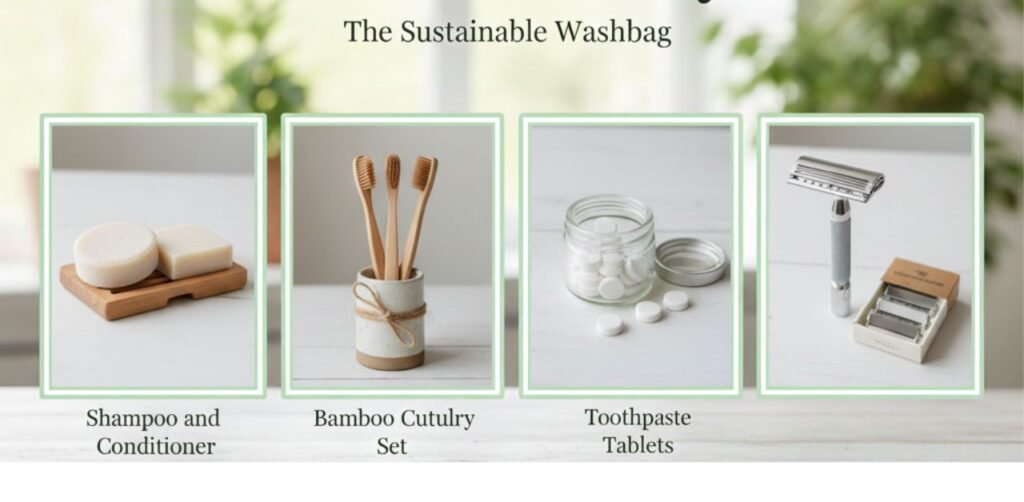
Traditional toiletries are a nightmare for waste. Switch to “solids” to avoid plastic bottles and leaks.
- Shampoo and Conditioner Bars: One bar can replace up to three plastic bottles.
- Bamboo Toothbrush: Biodegradable and anti-bacterial.
- Toothpaste Tablets: Eliminate the non-recyclable plastic tube.
- Safety Razor: A metal razor that lasts a lifetime; only the blades need recycling.
Comparative Table: Disposable vs. Zero Waste Alternatives
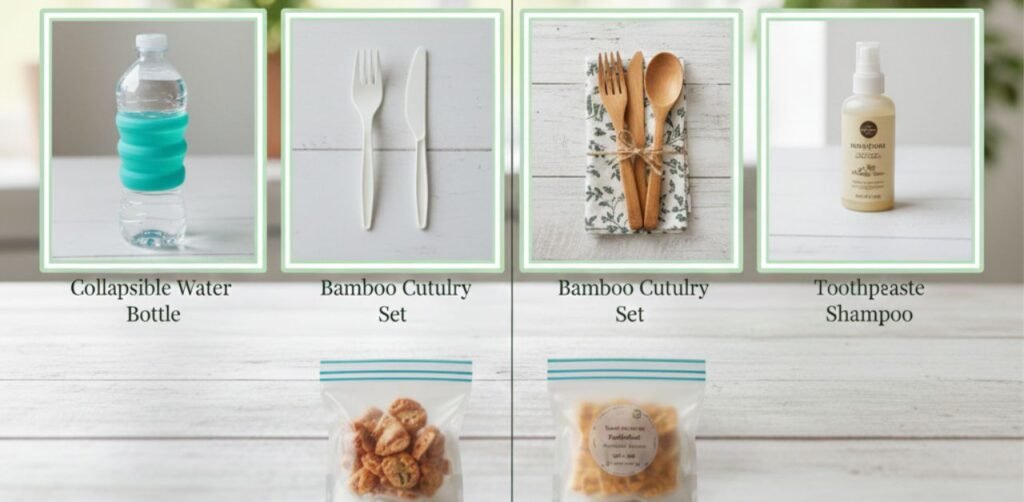
| Disposable Item | Zero Waste Alternative | Primary Benefit |
| Plastic Water Bottle | Insulated Flask/Collapsible Bottle | Keeps drinks cold + Zero waste. |
| Single-use Plastic Cutlery | Bamboo or Titanium Utensils | Durable and lightweight. |
| Travel-sized Shampoo | Solid Shampoo Bar | No leaks + TSA friendly. |
| Plastic Toothbrush | Bamboo Toothbrush | 100% Biodegradable. |
| Paper Tissues | Cotton Handkerchiefs | Reusable and soft on the skin. |
| Plastic Zip-lock Bags | Silicone Stasher Bags | Heat-resistant and washable. |
Step-by-Step: Assembling Your Kit
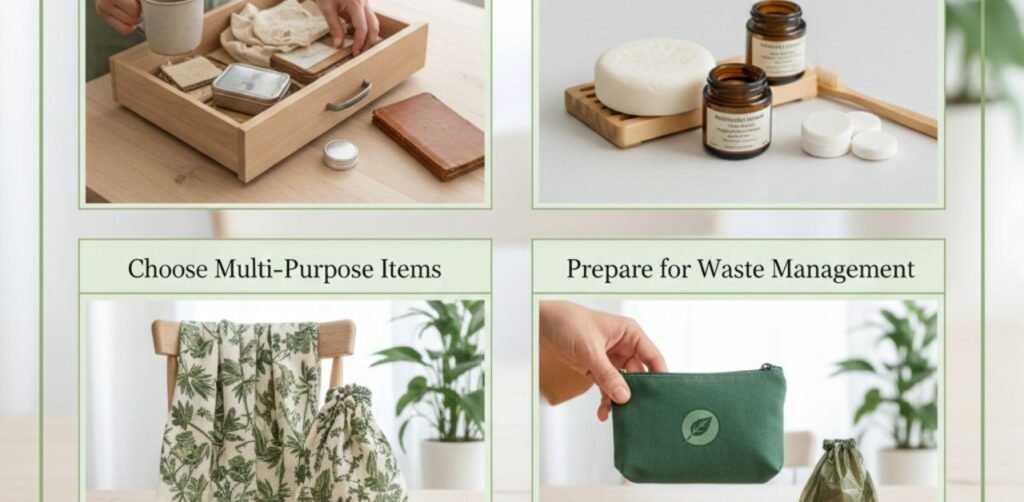
Step 1: Audit What You Already Have Don’t go out and buy a whole new set of “eco-branded” gear. Use a Mason jar from your kitchen or an old fork from your drawer. The most sustainable item is the one you already own.
Step 2: Transition to Solids Liquid restrictions are a hassle. By switching to solid soaps, deodorants, and perfumes, you save space and eliminate plastic packaging.
Step 3: Choose Multi-Purpose Items A large cotton sarong can be a towel, a blanket, a scarf, or even a laundry bag. Reducing the number of items you carry is the essence of zero waste.
Step 4: Prepare for Waste Management Sometimes, waste is unavoidable. Carry a small “trash pouch” to hold non-recyclables until you find a proper disposal point.
Advanced Tips for the Modern Nomad
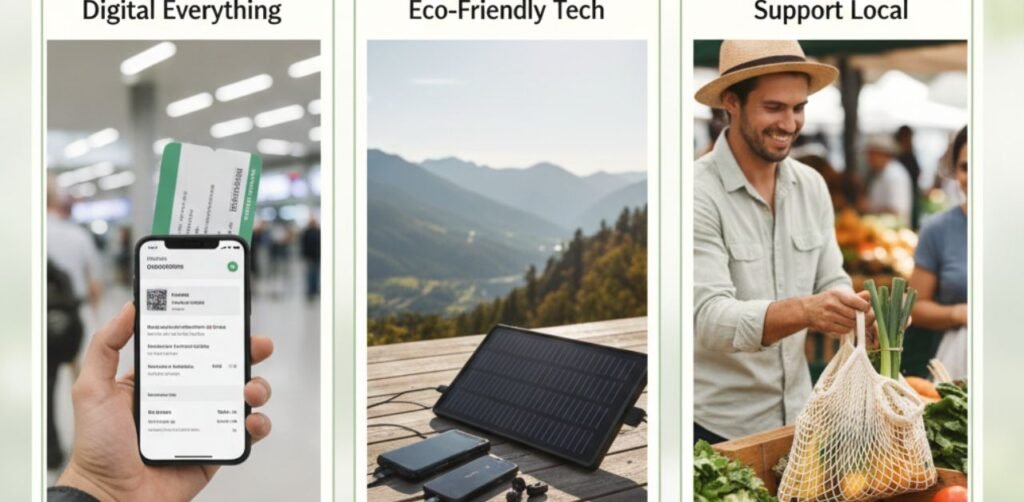
- Digital Everything: Use digital boarding passes and hotel bookings to save paper.
- Eco-Friendly Tech: Use a solar power bank to charge your devices sustainably.
- Support Local: Buy food from local farmers’ markets where you can put produce directly into your own cloth bags.
Frequently Asked Questions (FAQs)
Q1: Is a zero waste kit expensive to start? A: Initially, there is a small investment for items like a safety razor or a high-quality flask, but you will save hundreds of dollars over time by not buying disposables.
Q2: Will bamboo cutlery pass through airport security? A: Yes! Bamboo and wooden utensils are generally permitted. Avoid bringing sharp metal knives in your carry-on.
Q3: How do I clean my kit while staying in hostels? A: Most hostels have communal kitchens with sinks and soap. A quick rinse after each use is usually enough to keep your kit hygienic.
Q4: What if I forget my reusable bottle? A: Don’t panic. If you must buy a plastic bottle, choose the largest size possible to minimize the ratio of plastic to water, and ensure it is recycled properly afterward.
Conclusion
Learning how to make a zero waste travel kit for beginners is a rewarding journey that changes the way you interact with the world. It encourages you to be more mindful of your consumption and appreciative of the environments you visit. By replacing plastic with purpose-driven alternatives, you aren’t just a tourist; you are a guardian of the destinations you love. Start small, be consistent, and remember that every piece of plastic you refuse is a victory for the planet.