
For the modern adventurer, the call of the wild is stronger than ever. However, as more people hit the trails, the environmental impact on our wilderness areas is increasing. One of the most significant ways hikers can protect the environment is by switching to biodegradable travel toiletries kits.
Traditional plastic bottles and chemical laden soaps take decades to break down and can poison local water sources. In this 2026 guide, we explore the best eco friendly solutions that allow you to stay clean without leaving a footprint.
Why Hikers Must Switch to Biodegradable Toiletries
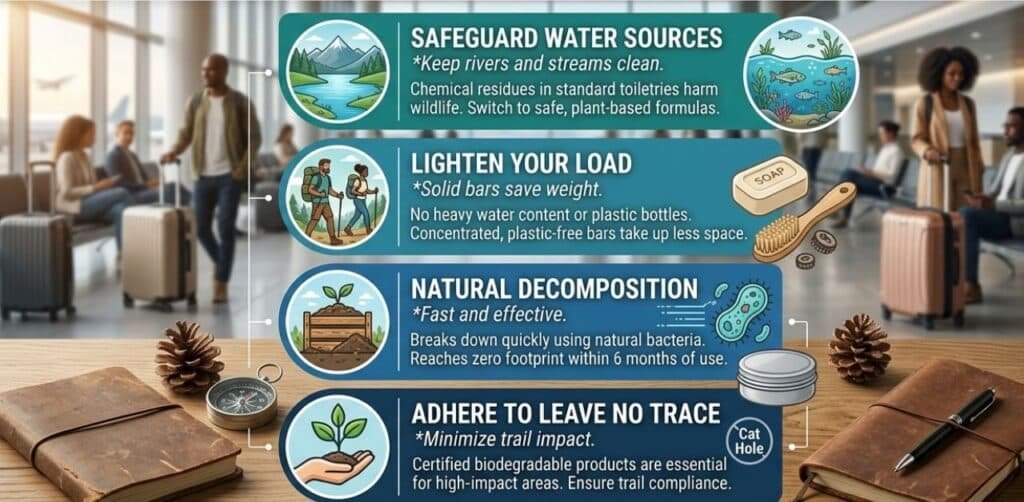
When you wash your face or brush your teeth in the backcountry, the gray water eventually seeps into the soil and nearby streams. Conventional products contain sulfates, parabens, and synthetic fragrances that harm aquatic life.
- Environmental Protection: Biodegradable products break down naturally using bacteria and fungi.
- Weight Reduction: Many eco friendly kits use solid bars (shampoo/soap) which are lighter and last longer than liquids.
- Compliance: Many National Parks now require hikers to use leave no trace certified products.
- Safety: Natural ingredients are often better for your skin, especially when you are exposed to harsh outdoor elements.
Comparison: Top Eco-Conscious Toiletries Kits of 2026
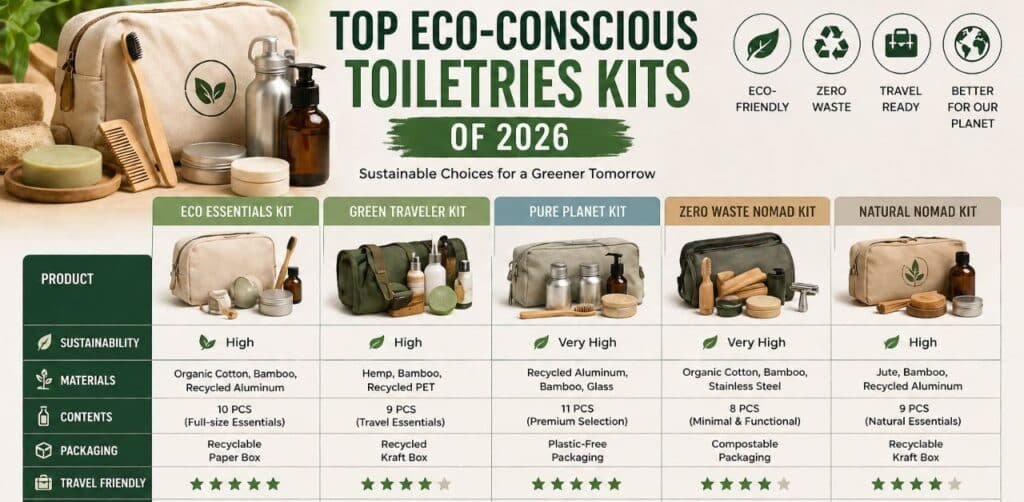
| Kit Name | Key Components | Packaging Material | Weight | Best For |
| EarthTrail Pro | Solid Shampoo, Bamboo Brush, Toothpaste Tabs | Recycled Cork | 150g | Long-Distance Hiking |
| EcoHiker Essentials | Multi-use Liquid Soap, Compostable Loofah | Aluminum | 200g | Weekend Camping |
| GreenPath Mini | Concentrated Soap, Deodorant Balm | Bamboo Fiber | 120g | Ultralight Backpacking |
| OceanSafe Kit | Reef-safe Sunscreen, Bio-Soap | Silicone (Reusable) | 250g | Tropical Beach Hiking |
What Should Be in Your Biodegradable Kit?
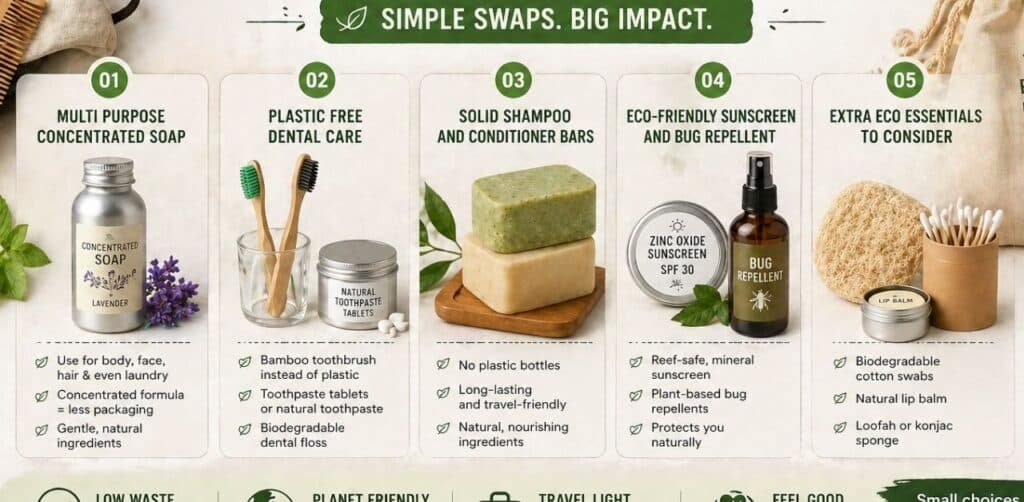
A complete kit for an eco conscious hiker should address all hygiene needs while remaining compact. Here are the essential components:
1. Multi Purpose Concentrated Soap
Look for 10 in1 soaps that can wash your body, hair, dishes, and even clothes. Brands that use organic oils like peppermint or tea tree are highly effective at cutting through trail grime.
2. Plastic Free Dental Care
Plastic toothbrushes are a major pollutant. Switch to a bamboo toothbrush with castor bean oil bristles. For toothpaste, use Toothpaste Tablets. They are lightweight, mess free, and come in compostable pouches.
3. Solid Shampoo and Conditioner Bars
Liquid bottles are prone to leaking in your backpack. Solid bars eliminate the need for plastic packaging and save space. If you’re traveling through humid areas, remember to store these in a dry bag, much like how you would protect your Bluetooth enabled smart padlocks from moisture.
4. Eco-Friendly Sunscreen and Bug Repellent
Standard sunscreens contain oxybenzone, which is toxic to water ecosystems. Eco conscious hikers should choose mineral based sunscreens Zinc Oxide and deet free bug repellents made from essential oils.
How to Use Biodegradable Soap Correctly
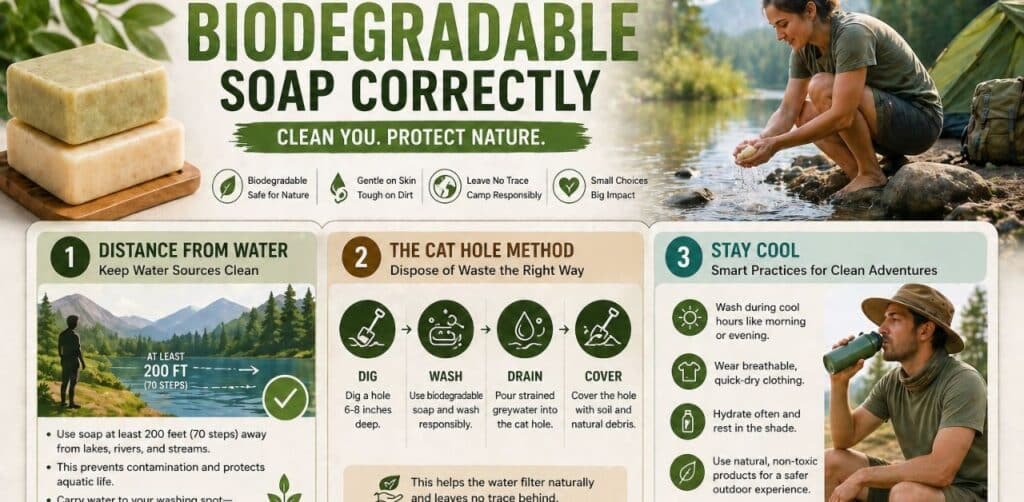
A common mistake hikers make is thinking biodegradable means you can wash directly in a river. This is incorrect.
- Distance from Water: Always wash at least 200 feet 70 steps away from any lake or stream.
- The Cat Hole Method: Dig a small hole 6 inches deep to dispose of soapy water. The soil bacteria will help break down the product much faster than water can.
- Stay Cool: If you’re hiking in high temperatures, use a Smart Wearable Neck Fan to reduce sweat, which actually helps your toiletries last longer as you won’t need to wash as frequently.
Top Benefits of Zero Waste Packaging
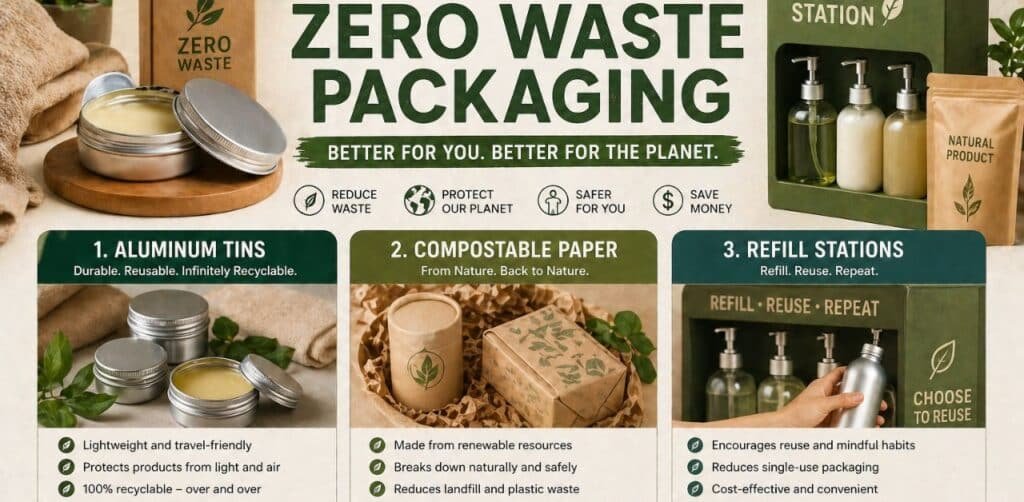
The packaging is just as important as the product inside. In 2026, the trend has shifted towards:
- Aluminum Tins: Highly recyclable and durable.
- Compostable Paper: Used for soap wraps that you can actually bury.
- Refill Stations: Many outdoor gear shops now allow you to refill your own containers.
Frequently Asked Questions (FAQs)
Q1: Does biodegradable soap actually clean as well as regular soap?
Yes High quality biodegradable soaps use natural surfactants derived from coconut or vegetable oils that are extremely effective at removing dirt and bacteria without the harsh chemicals.
Q2: Can I use biodegradable soap in my hair?
While you can use multi purpose liquid soap in your hair, it may leave it feeling dry. For long hikes, we recommend a dedicated solid shampoo bar which is formulated specifically for hair health.
Q3: Are bamboo toothbrushes really better for the environment?
Absolutely a plastic toothbrush stays in the environment for 500 years. A bamboo handle can be composted in your backyard or a commercial facility in less than six months.
Q4: How long do toothpaste tablets last?
A small tin of 60 tablets will last one person exactly one month if they brush twice a day. This makes planning your pack weight very easy compared to a tube of paste.
Conclusion
Investing in a biodegradable travel toiletries kit is a small change that makes a massive impact. As eco conscious hikers, it is our responsibility to protect the trails we love. By choosing plastic free, chemical free, and lightweight hygiene solutions, you ensure that the wilderness remains pristine for generations to come.
Stay clean, stay green, and enjoy the beauty of nature responsibly.