
Long-haul travel opens the door to incredible global adventures cultural immersion and unforgettable life experiences but it also carries a significant environmental footprint. From jet fuel emissions that linger in the upper atmosphere to single use plastics handed out effortlessly at 35,000 feet flying long distances requires a deeply mindful and proactive approach. Adopting eco conscious habits allows modern explorers to actively reduce waste respect fragile local ecosystems and travel more sustainably without ever sacrificing personal comfort health, or convenience. This comprehensive up to date guide details actionable strategies minimalist gear choices thoughtful cabin practices and deeper philosophical shifts designed to transform your next international long haul flight into a truly green responsible journey.Equipping your personal carry-on bag with sustainable travel accessories and eco-friendly travel gear keeps your journey organized, highly functional, and entirely low-waste from departure to arrival.
1. Understanding the Carbon Footprint and Atmospheric Impact of Long-Haul Flying
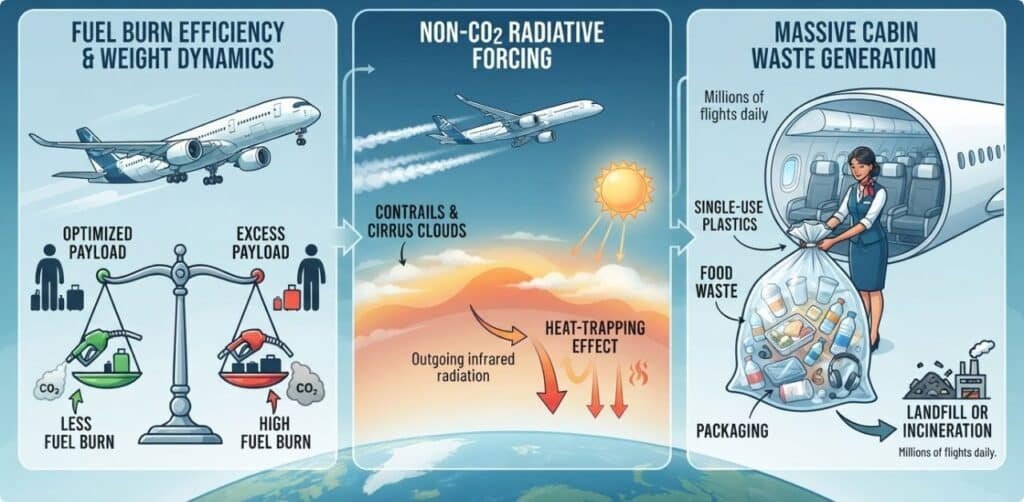
Before stepping onto a plane it helps to understand why long-haul flights demand special attention from eco-conscious travelers. Aviation accounts for a notable and growing share of global carbon emissions and high altitude emissions have a complex magnified warming effect on the upper atmosphere that differs significantly from ground transportation.
- Fuel Burn Efficiency and Weight Dynamics: Longer intercontinental routes often utilize massive wide body aircraft which burn colossal amounts of jet fuel per hour to cover thousands of miles across oceans, mountain ranges and continents. Every single pound of extra weight multiplies fuel consumption.
- Non-CO2 Radiative Forcing: Vapor trails (contrails) and high altitude cirrus cloud formation contribute significantly to radiative forcing magnifying the climate impact far beyond standard ground level vehicle emissions by trapping heat in the upper troposphere.
- Massive Cabin Waste Generation: International flights routinely distribute millions of plastic wrapped blankets disposable headphones flimsy plastic cups individually wrapped wet wipes and multi layered single use meal trays daily creating staggering volumes of landfill bound trash.
Recognizing these compounding factors empowers conscious travelers to make intentional choices. Simple adjustments such as packing lighter to decrease overall aircraft weight, choosing direct flight routes whenever possible to avoid energy-intensive takeoffs and landings, and opting for airlines that actively invest in sustainable aviation fuels (SAF)can dramatically lower your personal travel footprint.
2. Essential Eco-Friendly Gear for Your Carry-On and Personal Item

Packing light is one of the most effective ways to lower your travel footprint before you even reach the airport terminal. Every extra kilo increases aircraft fuel consumption across thousands of miles. Equipping your personal carry on bag with sustainable reusable accessories keeps your journey organized highly functional and entirely low waste from departure to arrival.
| Accessory Category | Essential Eco-Features | Sustainable Benefit | Travel Impact |
| Hydration Vessel | Collapsible silicone or stainless steel | Eliminates single-use plastic bottles | Saves money and reduces landfill waste |
| Toiletry Kit | Solid shampoo bars, bamboo toothbrush | Zero plastic packaging, TSA-friendly | Reduces chemical runoff and plastic bottles |
| Cutlery Set | Stainless steel or bamboo spork | Reusable alternative to plastic utensils | Avoids single-use airport food plastics |
| Compression Packing Cubes | Recycled PET fabric | Optimizes space, keeps clothes crease-free | Encourages minimalist packing discipline |
3. Mastering Zero-Waste In-Flight Habits at 35,000 Feet
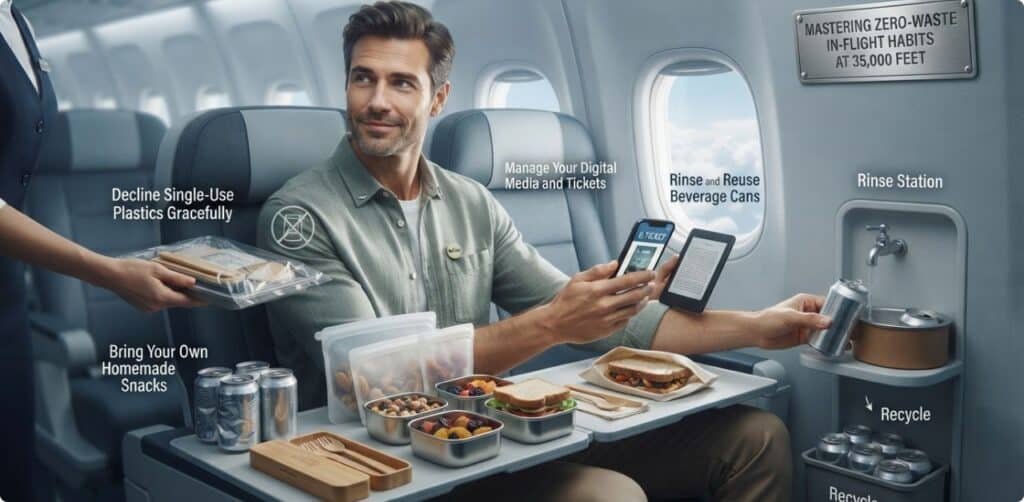
A typical long haul flight can generate an alarming amount of municipal trash per passenger over the course of a single journey. Changing how you interact with cabin services significantly curtails this continuous unnecessary waste stream.
- Decline Single-Use Plastics Gracefully: Politely decline plastic wrapped headphones miniature plastic water cups and pre packaged snack wrappers that you do not intend to consume or keep.
- Bring Your Own Homemade Snacks: Pack homemade trail mix fresh fruit or bulk dry foods in reusable silicone pouches (such as Stasher bags) to bypass plastic meal wrappers entirely.
- Manage Your Digital Media and Tickets: Download books movies travel guides and boarding passes onto your personal electronic devices beforehand to avoid paper waste and single use plastic novelties.
- Rinse and Reuse Beverage Cans: If you are given a canned beverage during flight service keep the aluminum can to rinse and recycle properly after landing rather than letting it get lost in mixed cabin trash.
4. Comparing Cabin Comfort vs. Environmental Impact
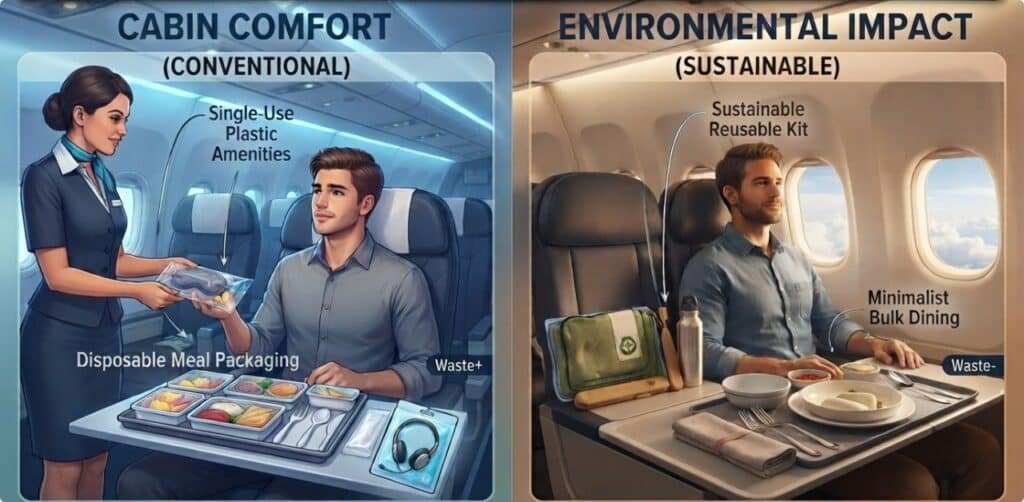
Balancing personal comfort during a grueling 12-hour flight with strict environmental responsibility can feel challenging. Jab aap safar ki tayari kar rahe hon, toh behtareen sustainable travel gifts aur eco-friendly in-flight essentials ka chunao karna bohot zaroori hai. The comparison table below highlights eco-friendly swaps for traditional travel comforts that keep you cozy while protecting the planet.
5. Choosing Airlines with Advanced Green Initiatives and Modern Fleets
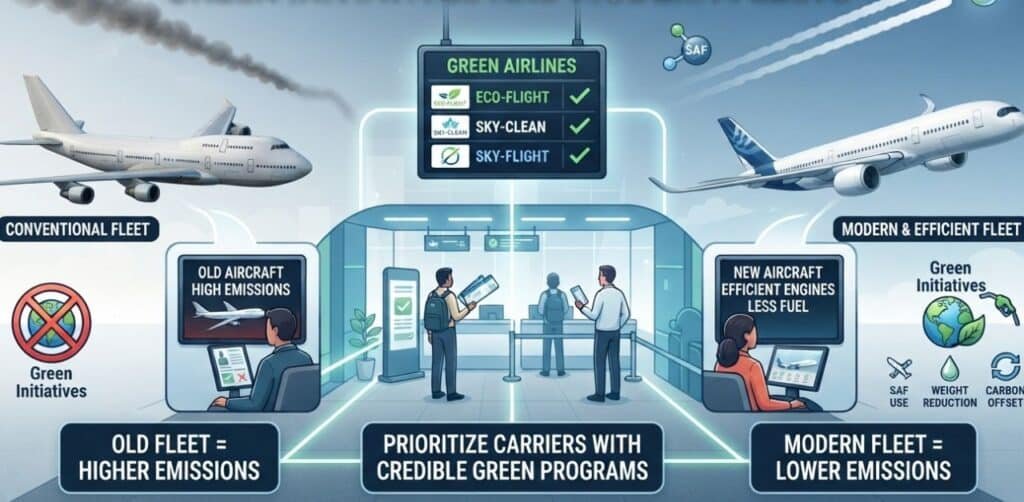
When booking long-haul flights, looking beyond ticket prices to examine an airline’s environmental commitments makes a profound difference for the future of green aviation. Modern carriers are adopting various cutting-edge technologies to mitigate their operational footprint.
- Fleet Modernization and Composite Materials: Newer aircraft models, such as the Airbus A350 or Boeing 787 Dreamliner, utilize advanced lightweight composite materials and hyper fuel-efficient engines that significantly reduce emissions per passenger mile.
- Sustainable Aviation Fuel (SAF) Integration: Check if your chosen airline actively incorporates SAF into its daily operations, which can cut lifecycle greenhouse gas emissions by up to 80% compared to conventional petroleum-based jet fuel.
- Advanced Operational Efficiency: Forward-thinking airlines optimize flight paths, minimize taxiing times by utilizing single-engine taxiing procedures, and reduce unnecessary heavy cargo weight to demonstrate a serious commitment to cleaner skies.
6. Sustainable Ground Transportation and Airport Practices
Eco-conscious travel does not start at the boarding gate; your journey to and through the airport terminal sets the tone for your entire trip. Making green transit choices helps lower your cumulative trip emissions right from your doorstep.
| Travel Stage | Conventional Approach | Sustainable Alternative | Eco-Friendly Impact |
| Airport Transit | Solo taxi or private car rental | Airport express trains or electric buses | Drastically lowers personal transit emissions |
| Check-In | Printing paper tickets and bag tags | Mobile boarding passes and digital tags | Eliminates paper waste and chemical processing |
| Duty-Free Shopping | Buying plastic-wrapped souvenirs | Local artisan markets at your destination | Supports local economies and cuts excessive packaging |
| Lounge Dining | Grabbing individually wrapped plastic snacks | Choosing sit-down dining or bulk dispenser options | Minimizes single-use plastic item disposal |
7. Intelligent In-Flight Energy and Power Management
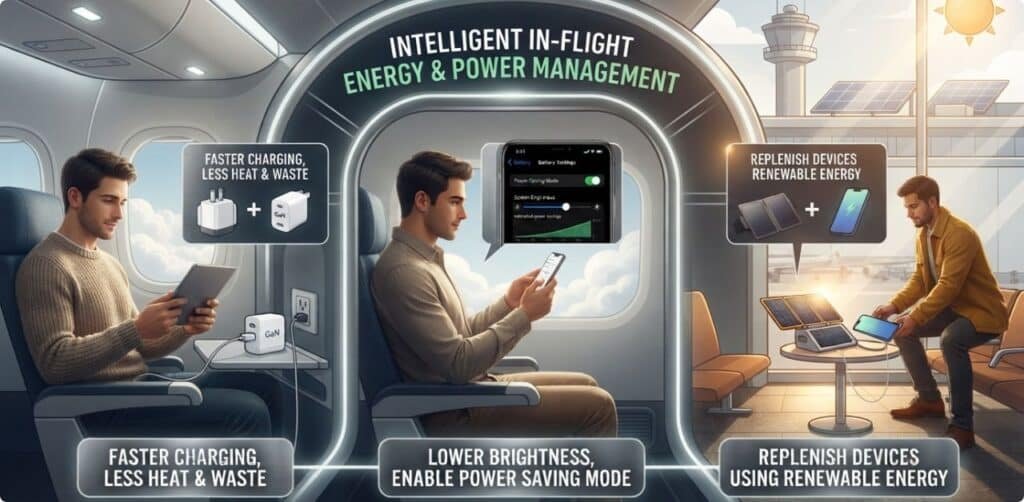
Long-haul flights require keeping your essential devices charged throughout the journey, but managing personal power consumption helps maintain an eco-conscious mindset while onboard.
- Use Energy-Efficient GaN Chargers: Invest in modern GaN (Gallium Nitride) chargers that pull less electrical power and charge multiple devices efficiently from a single seat power port.
- Optimize Device Screen Settings: Lower screen brightness, enable deep battery saver modes, and turn off background app refreshes while flying to drastically reduce the need for constant recharging.
- Solar Power Banks for Layovers: Charge a compact, high-efficiency solar power bank before your trip so you can harness clean renewable energy for smaller devices during layovers or remote excursions.
8. In-Flight Health, Hydration, and Low-Waste Nutrition
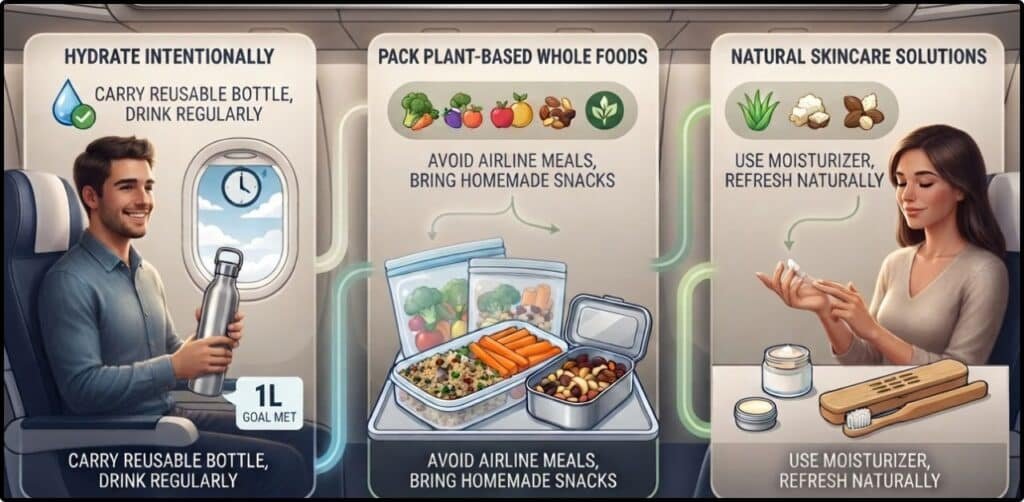
Cabin air is notoriously dry and heavily recycled, leading many travelers to rely heavily on single-use bottled water and heavily processed airline snacks. Maintaining your health sustainably requires forethought and preparation.
- Hydrate Intentionally: Bring a large reusable bottle to fill up post-security, and ask flight attendants to refill it directly from their large galley pitchers rather than handing you dozens of small plastic cups.
- Pack Plant-Based Whole Foods: Preparing nutrient-dense meals like grain salads, raw nuts, and fresh whole fruit at home completely avoids processed airline food containers and reduces your overall dietary carbon footprint.
- Natural Skincare Solutions: Use multi-purpose organic balms or pure coconut oil housed in small reusable tins to combat dry cabin skin instead of relying on disposable sheet masks and foil-wrapped lotion packets.
9. Evaluating Carbon Offsetting Programs Critically
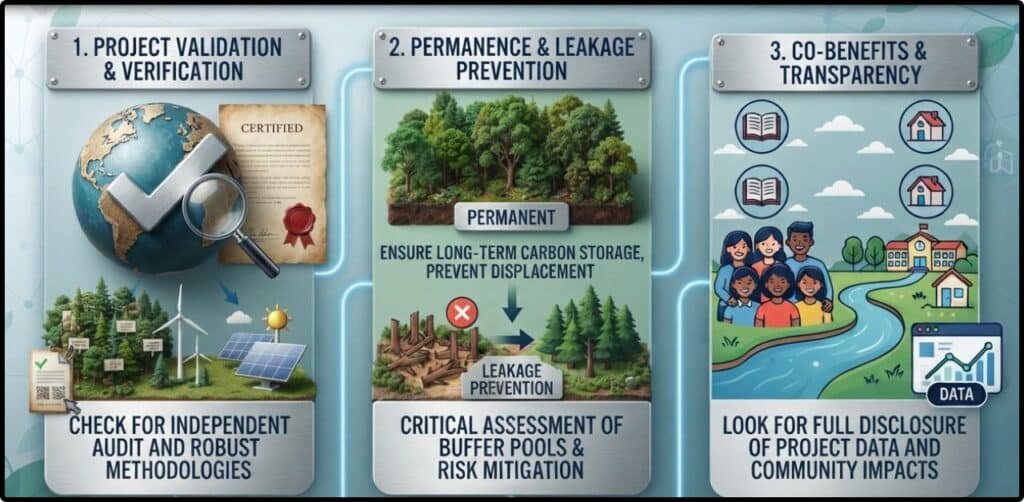
Many international airlines offer carbon offset options during online checkout, but understanding how these programs operate behind the scenes ensures your financial contribution is genuine, measurable, and effective.
| Offset Type | How It Works | Potential Pitfall | Best Practice |
| Reforestation Projects | Funding tree planting to absorb carbon over time | Trees can be lost to fires or deforestation later | Choose verified gold-standard projects |
| Renewable Energy Grants | Funding wind, solar, or hydro installations | Harder to verify direct short-term carbon reduction | Support direct community solar initiatives |
| Direct Air Capture (DAC) | Removing CO2 directly from the ambient air | Still an emerging and expensive technology | Combine offsets with active in-flight reduction |
10. Frequently Asked Questions (FAQs)
- Can I bring an empty water bottle through airport security? Yes, standard airport security checkpoints universally allow empty reusable water bottles. You can easily fill them up at drinking fountains or water hydration stations once you clear security.
- Are solid shampoo bars allowed in carry-on luggage? Solid shampoo, conditioner, and soap bars are completely exempt from liquid volume restrictions, making them ideal companions for minimalist packing and eco-friendly travel.
- How does packing lighter actually save fuel? Lighter aircraft require significantly less thrust and burn fewer hydrocarbons during both takeoff runs and extended cruising altitudes, directly lowering carbon emissions.
- What should I do with organic food scraps on a flight? Store apple cores, banana peels, or vegetable scraps in a sealable silicone bag until you land, then dispose of them in proper composting facilities rather than airplane bins.
- Are airline carbon offset programs effective? While offsets help fund renewable energy or reforestation projects, actively reducing your personal baggage weight and choosing fuel-efficient airlines remain much more direct actions.
- How can I avoid receiving plastic cutlery with airline meals? Inform the flight attendant politely when they take your meal order that you brought your own personal reusable utensils and kindly decline the plastic package.
- What is the best material for eco-friendly travel clothing? Organic cotton, hemp, Tencel, and ethical merino wool offer breathable, naturally odor-resistant, and fully biodegradable alternatives to synthetic polyester fabrics.
- How do I keep my reusable items clean during a long trip? Pack a small, multi-purpose travel soap bar or eco-friendly soap sheets to hand-wash your cutlery, bottles, and food containers in hotel sinks or airport restrooms.
- Is digital boarding pass management better for the environment? Yes, utilizing mobile apps eliminates paper thermal ticket printing entirely, saving precious trees, water resources, and harsh chemical processing agents.
- Can I compost bamboo toothbrushes at the end of their life? Yes, once you snap off the nylon bristles with pliers, the natural bamboo handle is fully biodegradable and backyard compostable.
- How do I pack snacks without creating plastic waste? Buy raw nuts, dried fruit, oats, or seeds from bulk food stores using reusable cloth produce bags, then transfer them directly into your travel containers.
- Why is minimizing cabin waste important? International flights frequently lack robust waste sorting and recycling facilities upon landing, meaning most single-use cabin items end up directly in landfills or oceans.
Conclusion
Embracing eco-conscious habits on long-haul flights proves conclusively that sustainable living does not have to stop the moment you step onto an airplane. By swapping disposable items for durable gear, packing lighter to conserve vital aircraft fuel, and making mindful, deliberate choices inside the cabin, you actively protect the breathtaking natural destinations you set out to explore. Small adjustments made by individual travelers compound over time into massive global benefits for our planet, ensuring that future generations can enjoy the profound wonders of international exploration without ever compromising the health of our global ecosystem.
Author Note
Written by the TravelGiftly Editorial Team—specializing in sustainable tourism, minimalist packing strategies, and practical eco-friendly gear reviews designed to help modern explorers tread lightly across the globe.