
Traveling with a toddler is often described as a “controlled chaos”. However, when your toddler is on the autism spectrum the “control” part of that equation can quickly vanish without the right preparation. Sensory Processing Disorder (SPD) often goes hand in hand with autism, meaning that the sensory heavy environment of an airport or a long car ride can be physically painful for a child.
As we navigate the travel landscape of 2026, the focus has shifted from merely distracting a child to “regulating” them. This distinction is vital. Distraction is temporary, but regulation helps a child feel safe and grounded. In this 1700 word guide, we will deep dive into the world of compact sensory friendly travel toys for autistic toddlers, exploring why they work how to use them and the top picks that fit into any travel gear setup.
Understanding the Sensory Profile of Travel
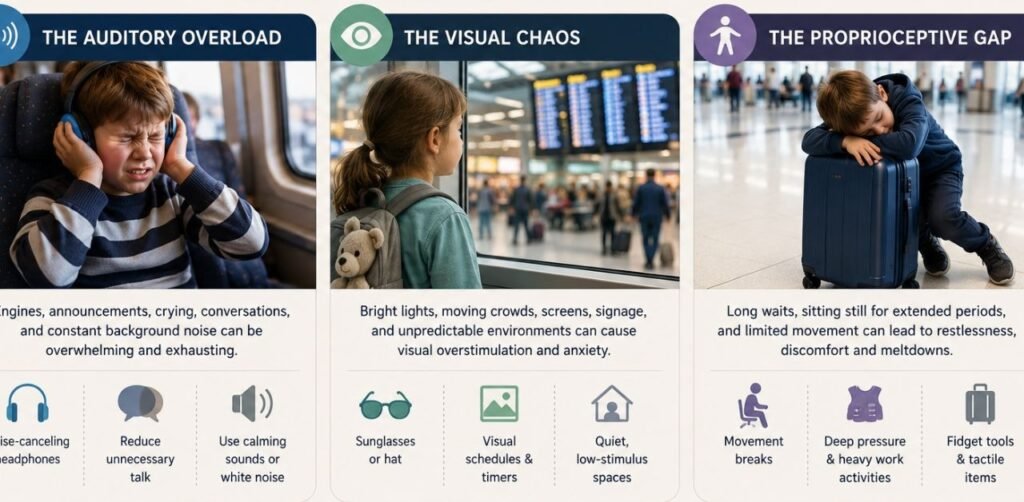
Before we look at the toys we must understand the “why.” Travel presents three major sensory challenges:
1. The Auditory Overload
The hum of an airplane engine is around 85 decibels. For a neurotypical adult, it’s background noise. For an autistic toddler, it can sound like a roar. This is why noise canceling headphones are the first piece of toy gear you should pack.
2. The Visual Chaos
Airports are filled with flashing screens moving walkways and thousands of people. This constant movement can cause visual tracking exhaustion. Compact visual toys help the child create a visual bubble to focus on something small and predictable.
3. The Proprioceptive Gap
Sitting in a car seat or plane seat for hours deprives a child of heavy work or movement. This leads to fidgeting and meltdowns. Tactile toys provide the resistance and feedback their muscles crave.
Sensory Input Matrix
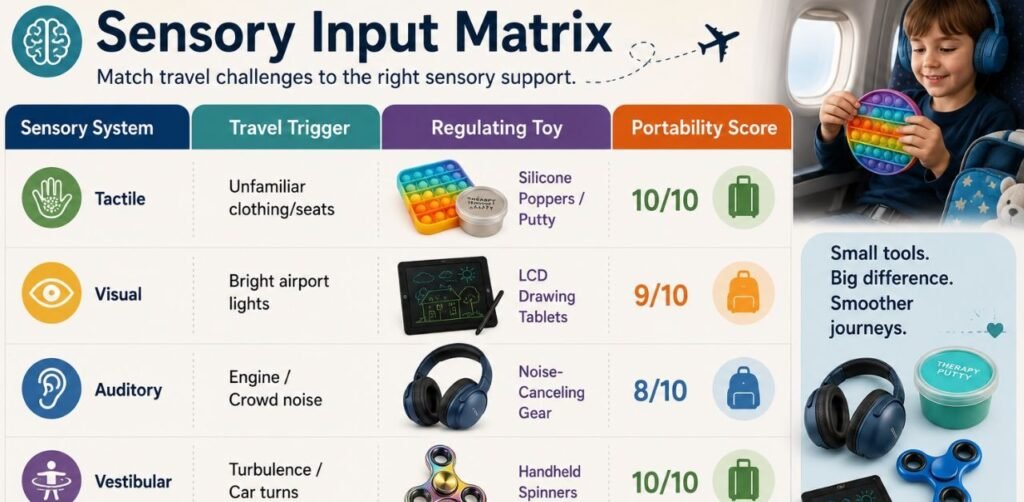
| Sensory System | Travel Trigger | Regulating Toy | Portability Score |
| Tactile | Unfamiliar clothing/seats | Silicone Poppers / Putty | 10/10 |
| Visual | Bright airport lights | LCD Drawing Tablets | 9/10 |
| Auditory | Engine / Crowd noise | Noise-Canceling Gear | 8/10 |
| Vestibular | Turbulence / Car turns | Handheld Spinners | 10/10 |
| Proprioceptive | Restricted movement | Weighted Lap Pads | 7/10 |
Top 10 Compact Toys for 2026
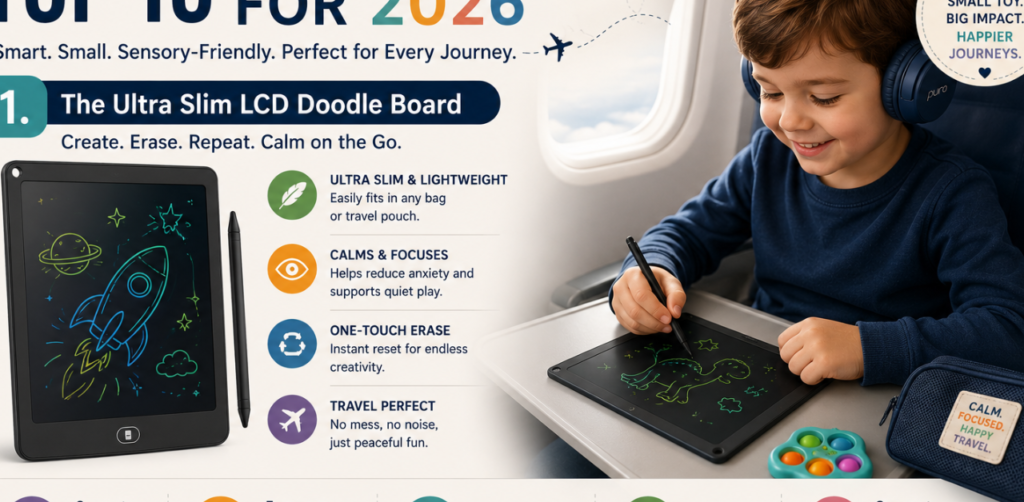
1. The Ultra Slim LCD Doodle Board
In 2026, these boards have become paper thin. They allow a child to draw with a stylus and erase with one click.
- Why it’s a winner: It’s completely mess free no crayons to lose, no ink on airplane seats.
- SEO Tip: This is a prime example of compact design, fitting easily into a laptop sleeve.
2. Silicone Suction Construction Sets
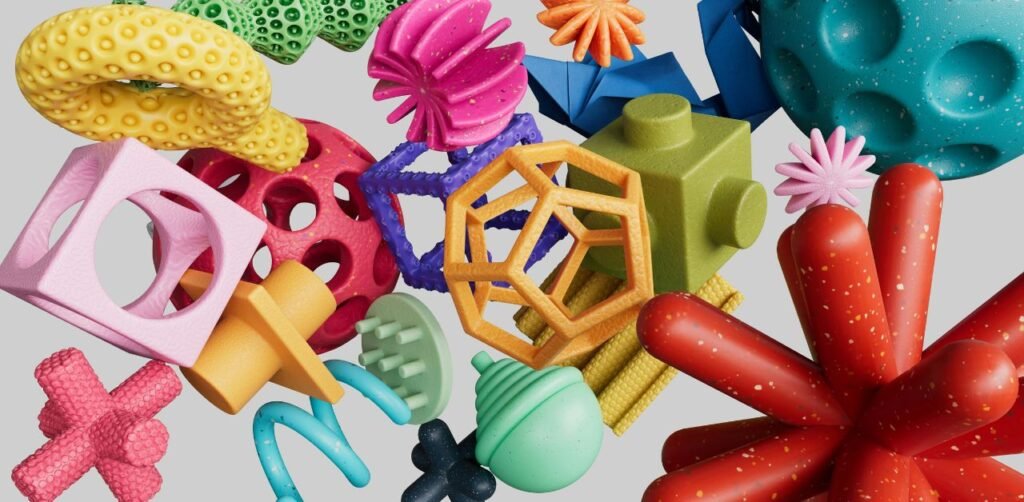
These small silicone pieces stick to windows and each other. They provide a satisfying pop sound that provides auditory feedback without being too loud for other passengers.
- Expert Use: Stick them to the airplane window to encourage the child to look out, which can help with motion sickness.
3. Travel Sized Therapy Putty
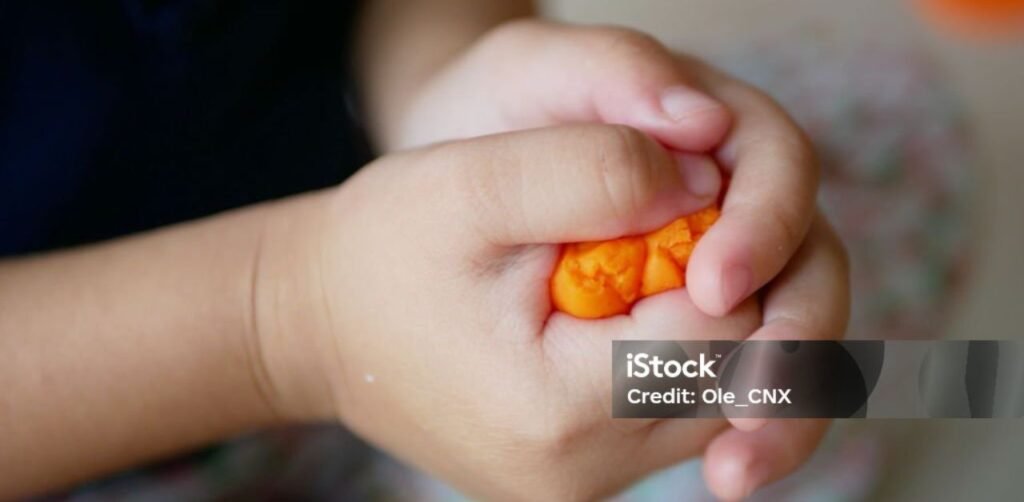
Unlike slime, therapy putty is firm and doesn’t stick to surfaces. It comes in small 2oz tins.
- Benefits: Squeezing the putty provides deep pressure to the hands, which is a powerful calming mechanism.
4. Buckle and Zip Pillows (Mini Version)
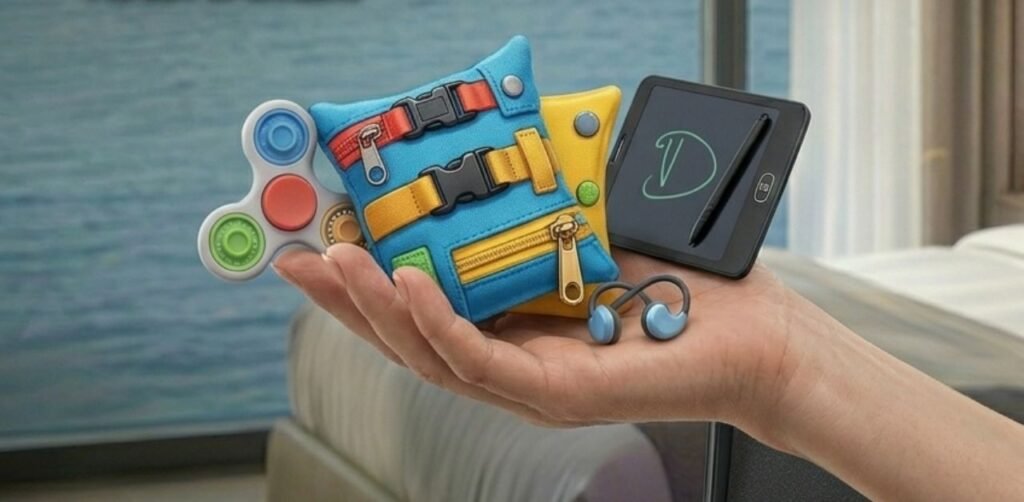
Toddlers love repetitive tasks. A small pillow with various buckles, zippers, and buttons keeps their hands busy for long durations.
- Skill Building: It also works on fine motor skills during the flight.
The Importance of “Compact Design” and Portability
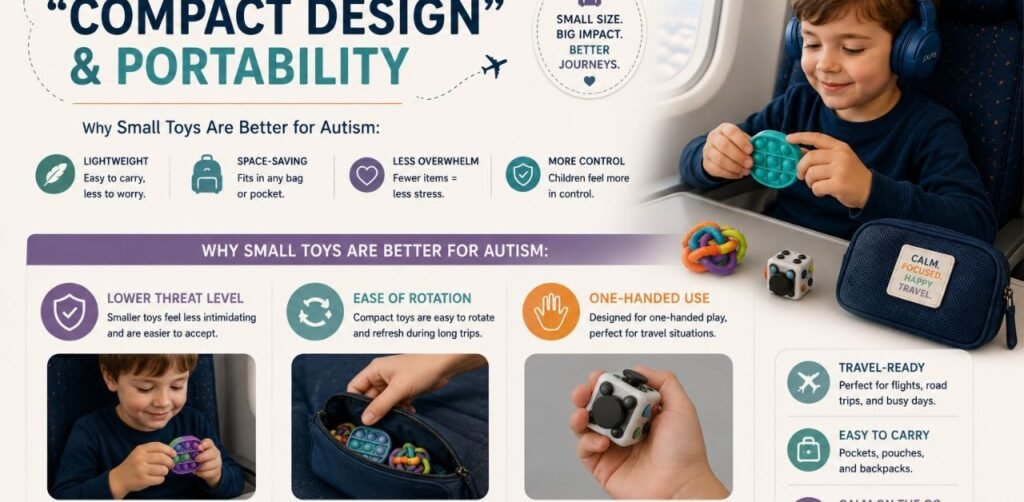
When you are traveling, your real estate is limited to your backpack or carry on. This is where compact design becomes a mechanical necessity. Every toy must earn its place in your bag.
As a frequent traveler, you know that luxury isn’t just about price. it’s about the ease of the journey. Similarly, choosing a compact design for your child’s toys is as important as choosing the rightLuxury Travel Gifts for Men for the adults in the family.
Why Small Toys Are Better for Autism:
- Lower Threat Level: Large bulky items can sometimes be intimidating to a child in a new environment.
- Ease of Rotation: You can hide 3-4 small toys in different pockets and reveal them one by one.
- One Handed Use: Many compact toys can be used with one hand while the other hand holds a comfort object.
Durability and Safety Comparison
| Toy Material | Cleanability | Durability | Noise Level |
| Silicone | High (UVC Safe) | Excellent | Silent |
| Plastic (LCD) | Medium | High | Silent |
| Fabric | Low (Machine Wash) | Medium | Silent |
| Metal (Fidgets) | High | Extreme | Low Click |
Sanitization Protocols for Travel Gear
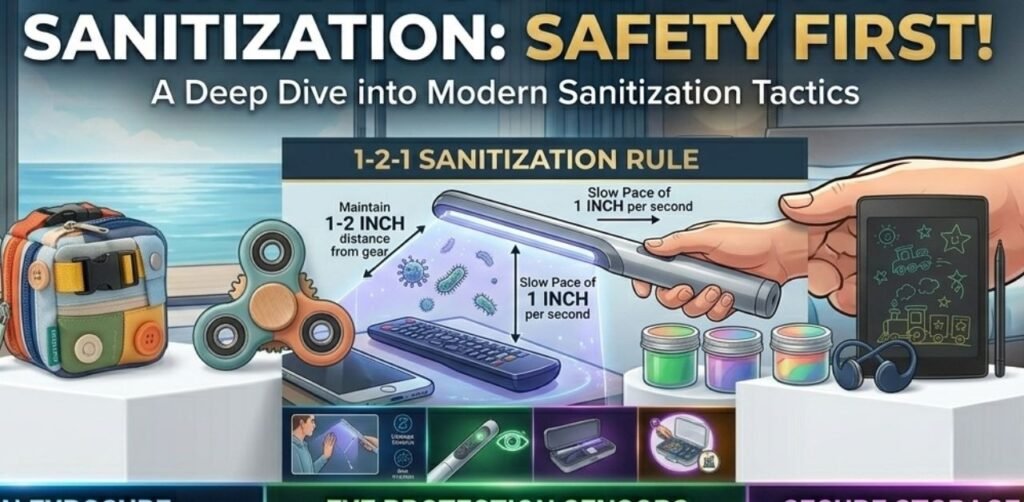
Keeping toys clean in public spaces is a top priority for 2026 travelers. Since toddlers often put toys in their mouths, you must have a plan.
The 1-2-1 Sanitization Rule
When using your UVC wand on your child’s travel gear, follow this expert protocol:
- 1 to 2 Inches: Keep the wand exactly this far from the toy.
- 1 Inch Per Second: Move the wand slowly to ensure the light breaks down germ DNA effectively.
- Vertical Hit: Ensure the light hits the toy directly for maximum coverage.
Clean toys are just as essential as other Inexpensive Retirement Gifts for Travelers that prioritize health and safety during long trips.
The “Surprise Bag” Strategy
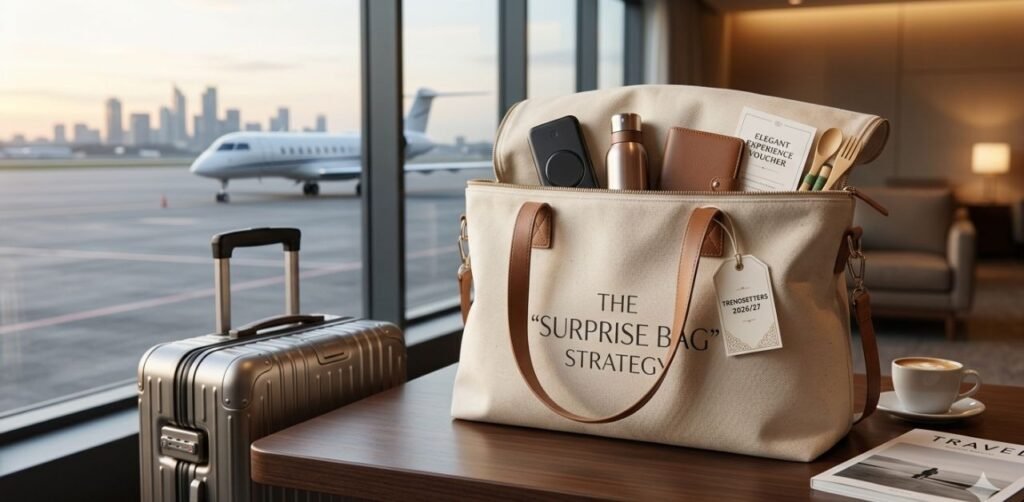
One of the most effective ways to use these toys is the “Surprise Bag” method.
- Preparation: Buy 5 new compact toys.
- Wrapping: Wrap each one in simple tissue paper.
- Deployment: Every time the Fasten Seatbelt sign comes on or there is a delay, let the child unwrap one. The act of unwrapping is a sensory experience in itself.
Trend Forecast for Neuro Inclusive Gear
| Feature | Old Standard | 2026 Innovation |
| Interaction | Basic Fidgeting | Haptic Vibrations |
| Charging | Disposable Batteries | Universal USB-C / Solar |
| Material | Cheap Plastic | Sensory-Grade Food Silicone |
| Sound | Loud / Annoying | Bone Conduction / Silent |
FAQs (The Expert Corner)
1. How do I know if a toy is “sensory friendly”?
Look for toys that don’t have sudden loud noises or flashing lights. If it encourages “open ended” play (like blocks or putty), it’s usually a good choice.
2. Can these toys be used in a hotel room?
Yes! They are perfect for helping a child settle into a new, unfamiliar room. Use them on the hotel desk or floor.
3. What is the best way to carry these toys?
A small, clear mesh bag is best. It allows you to see what’s inside quickly without dumping everything out.
4. Are these toys safe for toddlers who “mouth” things?
Always check for BPA Free and Food Grade Silicone labels. Avoid toys with small removable parts that could be a choking hazard.
5. How do I introduce a new toy during a meltdown?
Don’t Introduce it before the meltdown starts. Once a child is in full distress, they may not be able to process a new object.
6. Is an LCD tablet better than an iPad?
For sensory regulation, yes. LCD tablets don’t emit blue light, which can interfere with sleep patterns during travel.
7. Why is “compact design” highlighted so much?
Because travel is stressful enough without lugging a giant suitcase of toys. Small, effective tools are always better.
8. Can I use a UVC wand on all these toys?
Silicone and plastic are very safe for UVC. Be careful with fabric toys as the light won’t reach deep into the fibers.
9. Are these toys expensive?
Most compact sensory toys are very affordable, ranging from $5 to $25.
Conclusion
Successfully traveling with an autistic toddler in 2026 is all about the “Gear and the Grace.” By selecting the right compact sensory friendly travel toys, you are giving your child the tools they need to regulate their own emotions in a world that can often feel too loud and too bright.Remember, the goal of travel isn’t perfection; it’s the experience. With your travel gear packed and your sensory bag ready, you are prepared for whatever the journey throws your way.