
Long haul travel is often an exhausting endeavor, characterized by cramped seating, recycled air, and hours of physical inactivity. While many travelers focus on packing the right neck pillow or noise canceling headphones, one of the most critical components for physical well being is often overlooked circulation. Prolonged sitting in a pressurized cabin can lead to a variety of vascular issues, ranging from minor swelling to more serious conditions like Deep Vein Thrombosis (DVT).
Lightweight compression socks have emerged as a non negotiable travel essential for those seeking both comfort and safety during international transit. This guide explores the science, benefits, and selection process for finding the perfect pair to keep your legs feeling fresh upon arrival.
Understanding the Science of Graduated Compression
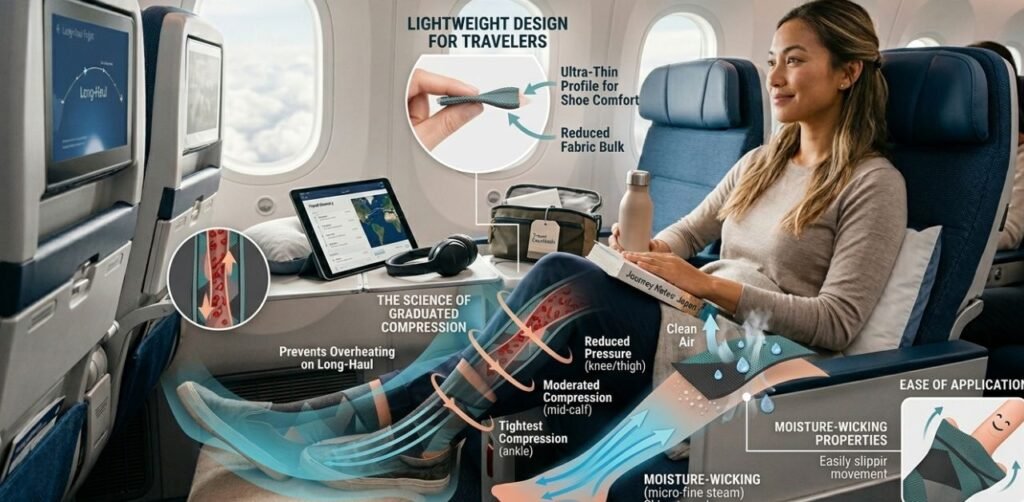
The primary function of compression hosiery is to assist the circulatory system in moving blood from the lower extremities back toward the heart. In a standard environment, the calf muscles act as a secondary pump for the veins. However, when seated for ten hours on a flight, this muscle pump is effectively turned off.
Lightweight compression socks utilize graduated compression. This means the pressure is tightest at the ankle and gradually decreases as the sock moves up the leg. This pressure gradient prevents blood from pooling in the feet, which is the primary cause of economy class syndrome or localized edema.
Why “Lightweight” Matters for Travelers
Unlike medical grade stockings used post surgery, lightweight versions are designed for breathability and ease of use. They are typically made from advanced synthetic blends like nylon spandex or natural fibers like merino wool. These materials offer.
- Moisture wicking properties to keep feet dry in varying cabin temperatures.
- Thermal regulation to prevent overheating during long durations.
- Ease of application, making them easier to put on in a confined airplane lavatory.
Comparison of Compression Materials and Pressure Levels
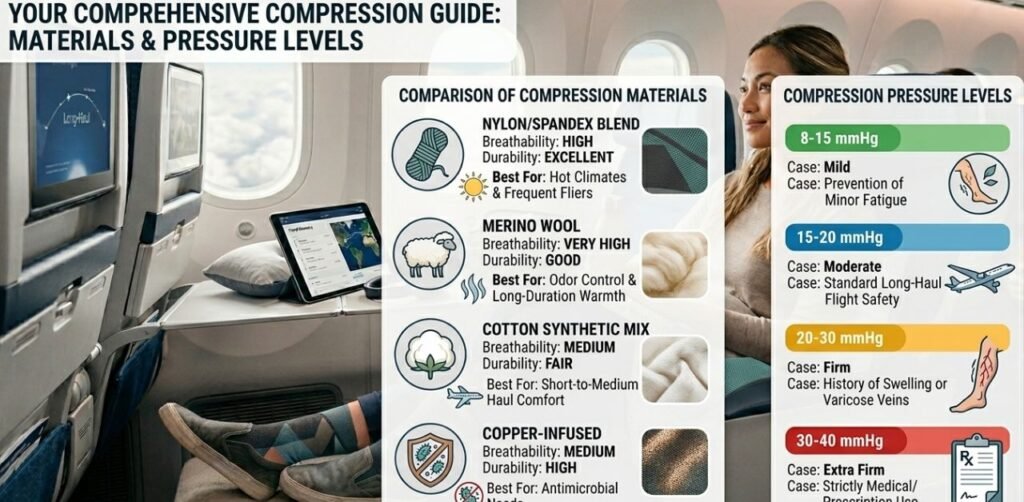
| Material Type | Breathability | Durability | Best For |
| Nylon/Spandex Blend | High | Excellent | Hot climates and frequent fliers |
| Merino Wool | Very High | Good | Odor control and long-duration warmth |
| Cotton Synthetic Mix | Medium | Fair | Short-to-medium haul comfort |
| Copper-Infused | Medium | High | Antimicrobial needs |
| Compression Level (mmHg) | Description | Primary Use Case |
| 8-15 mmHg | Mild | Prevention of minor fatigue |
| 15-20 mmHg | Moderate | Standard long-haul flight safety |
| 20-30 mmHg | Firm | History of swelling or varicose veins |
| 30-40 mmHg | Extra Firm | Strictly medical/prescription use |
Key Benefits of Wearing Compression Socks During Transit
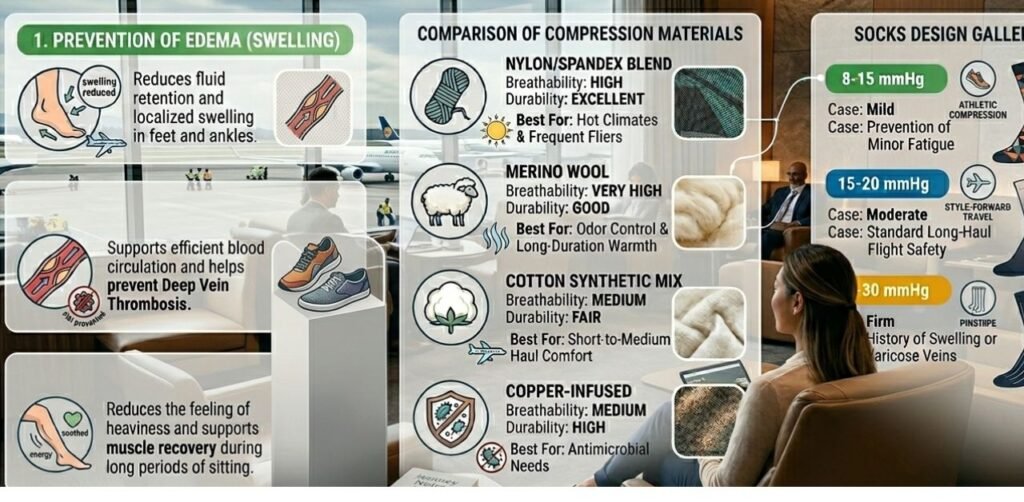
1. Prevention of Edema (Swelling)
The most immediate benefit is the reduction of ankle and foot swelling. Gravity causes fluid to accumulate in the lower legs when movement is restricted. Compression socks provide the external pressure necessary to keep fluids moving, ensuring your shoes still fit comfortably when you land.
2. Reducing the Risk of DVT
Deep Vein Thrombosis is a serious condition where blood clots form in deep veins, usually in the legs. If a clot breaks loose and travels to the lungs, it can cause a pulmonary embolism. By maintaining steady blood flow, compression socks significantly lower the risk of clot formation during long periods of stasis.
3. Combatting Leg Fatigue and Aching
The heavy leg sensation many travelers feel after a flight is often due to poor venous return. By supporting the vein walls and valves, compression socks reduce the vibration of muscles and improve oxygen delivery to the tissues, leaving you ready to explore your destination immediately.
Detailed Analysis of Compression Sock Fabrics
Synthetic Blends: The Performance Choice
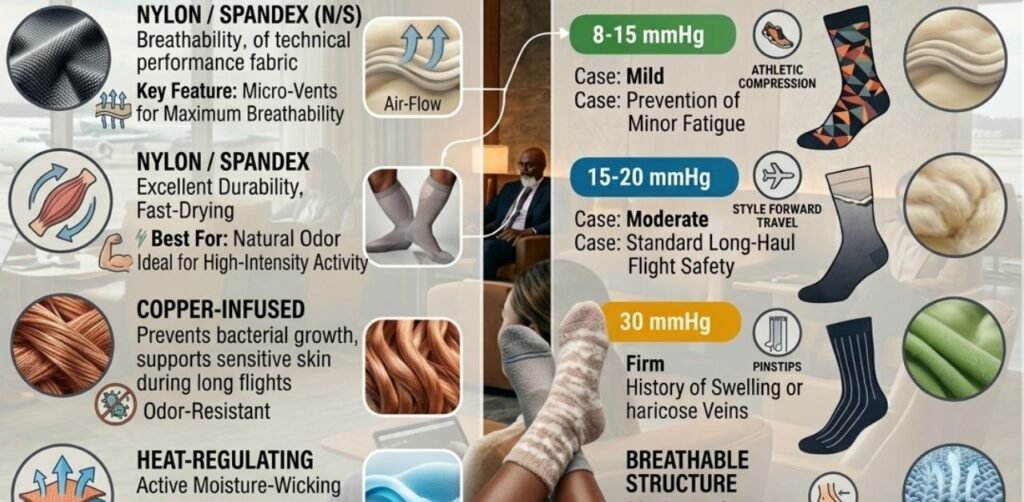
Synthetic materials like polyester and nylon are favored for their incredible durability and elasticity. In the world of lightweight travel gear, these fibers allow for a very thin profile that fits easily under tight shoes or stylish boots. Because these fibers do not absorb water they are ideal for wicking sweat away from the skin, which is vital during the temperature fluctuations of an airplane cabin.
Natural Fibers: The Comfort Choice
Merino wool is the gold standard for natural travel fibers. Unlike traditional wool, merino is incredibly soft and non itchy. Its primary advantage is odor resistance a crucial feature when you are wearing the same pair of socks for a 15 hour journey plus airport transfers. Bamboo is another rising star in the industry, offering a silk like feel and natural antibacterial properties.
How to Choose and Fit Your Travel Socks
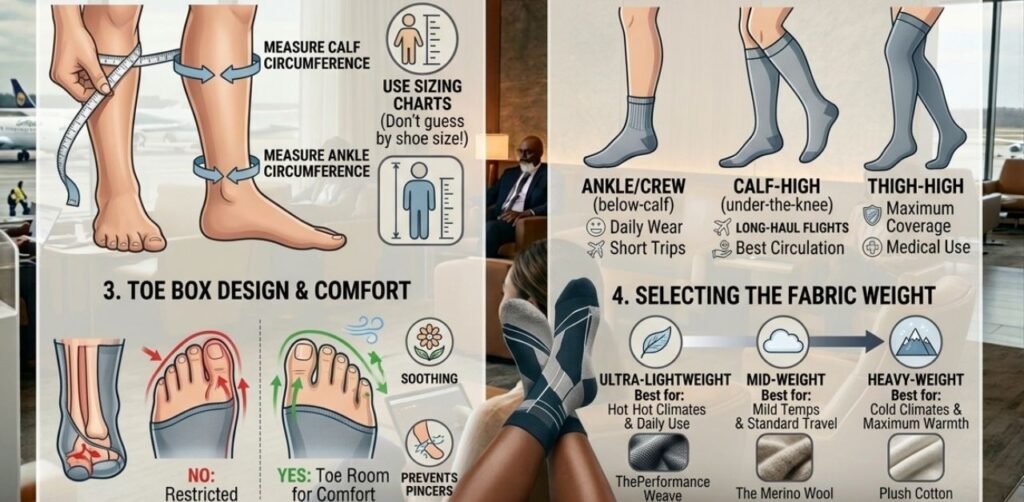
Finding the right pair involves more than just picking a color. To ensure the socks are effective rather than restrictive, consider the following criteria:
- Proper Sizing: Measure your calf circumference and ankle circumference. Most reputable brands provide a size chart based on these measurements rather than shoe size alone.
- Length: Knee high socks are the standard for travel. They should sit about two fingers below the knee crease to avoid pinching the popliteal vein.
- Toe Box Design: Look for a seamless toe box to prevent friction and blisters, especially if you plan on walking through large airports.
- Fabric Weight: Since you are looking for lightweight options, ensure the denier of the fabric is low enough to allow air circulation but high enough to maintain the required pressure.
Application Tips for Maximum Comfort
- Put them on early: It is best to put your socks on before your feet have a chance to swell ideally first thing in the morning of your flight.
- Smooth out wrinkles: Any fold or wrinkle in the fabric can create a pressure point that restricts blood flow instead of helping it.
- Combine with movement: Even with socks you should perform ankle pumps (flexing your feet up and down) every hour while seated.
Maintenance and Longevity of Compression Gear
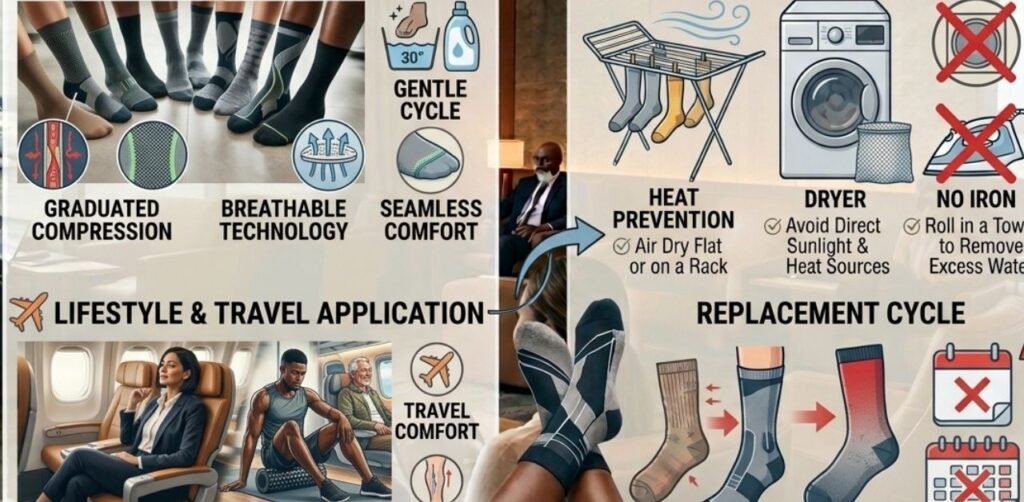
High quality compression fibers are delicate. To maintain the elasticity required for the graduated effect follow these care steps:
- Hand wash or gentle cycle: Use cool water and a mild detergent. Harsh chemicals can eat away at the elastic fibers.
- Avoid heat: Never put compression socks in a dryer, as high heat breaks down the spandex/elastane fibers. Air dry them away from direct sunlight.
- Replace regularly: Even the best socks lose their snap after a few months of frequent use. If they feel easy to put on, they are likely no longer providing effective compression.
The Role of Compression in Modern Travel Health
In the modern era of ultra long haul flights some lasting over 18 hours the physical toll on the human body is significant. Aviation health experts increasingly point toward compression therapy as a primary preventative measure. Beyond just the legs, the overall feeling of wellness is improved when the circulatory system is supported. When blood flow is efficient, the heart doesn’t have to work as hard to combat the effects of gravity while you are stationary.
Common Myths About Compression Socks
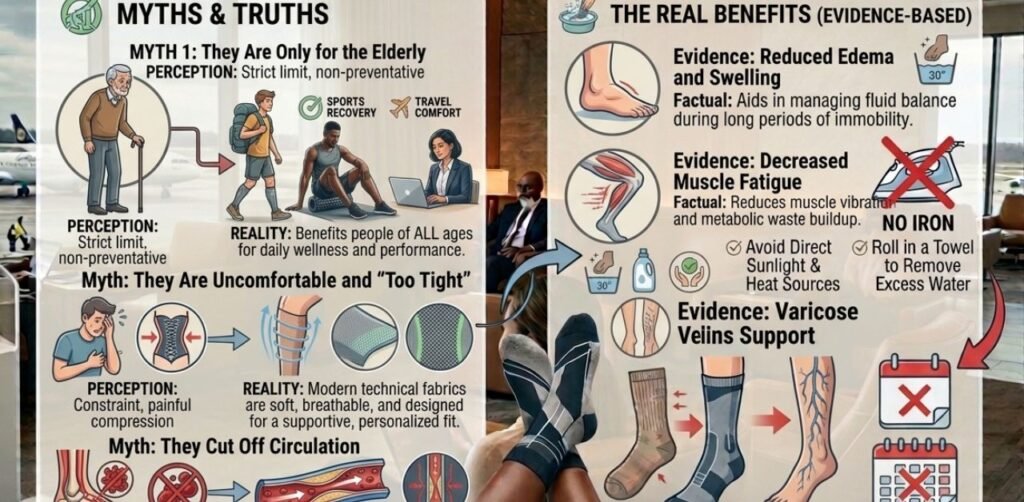
Myth 1: They Are Only for the Elderly
This is the most common misconception. In reality, anyone who sits or stands for long periods can benefit. Professional athletes use them for recovery and pregnant travelers find them essential for managing increased blood volume.
Myth 2: They Are Uncomfortable and Too Tight
If a sock feels painfully tight it is either the wrong size or the wrong compression level. A properly fitted lightweight sock should feel like a firm, supportive hug around the calves, not a tourniquet.
Myth 3: They Cut Off Circulation
Graduated compression is specifically designed to improve circulation. As long as you choose a travel or moderate level (15-20 mmHg), the risk of restricting blood flow is virtually non existent for healthy individuals.
FAQs
1. Can I wear compression socks for a 12 hour flight?
Yes, they are specifically designed for long durations. However ensure you have the correct size to prevent excessive pressure.
2. Should I sleep in compression socks on a plane?
Generally, yes. Since you are in a seated position even while sleeping, the socks continue to assist your circulation.
3. What happens if the socks are too tight?
If you feel numbness, tingling, or see a change in skin color in your toes, remove them immediately as they may be restricting arterial flow.
4. Are compression socks only for elderly travelers?
No. Travelers of all ages, including athletes and young adults, benefit from the reduced fatigue and safety features of compression gear.
5. How do I know if the compression is “graduated”?
Reputable brands will explicitly state graduated compression on the packaging. This is a technical standard that ensures higher pressure at the ankle.
6. Do these socks help with jet lag?
While they don’t fix your internal clock, they reduce physical exhaustion and body aches, which makes recovering from jet lag much easier.
7. Can I wear them if I have a skin condition?
If you have broken skin or a severe infection, consult a doctor first. For sensitive skin, look for hypoallergenic materials like bamboo or merino wool.
8. Do lightweight socks provide enough pressure?
Yes. Lightweight refers to the thickness of the fabric, not necessarily a lower pressure level. You can find lightweight socks in the 15-20 mmHg range.
9. Can I wear them with sandals?
While aesthetically unconventional, they function perfectly with any footwear. Many travelers choose to wear them under sneakers or boots for better support.
Conclusion
Lightweight compression socks are a simple yet powerful tool for anyone navigating the rigors of modern air travel. By prioritizing vascular health and lower limb comfort, you can transform your transit experience from a physical burden into a more manageable journey. Whether you are a business traveler flying once a week or a vacationer embarking on a once in a lifetime trip investing in high quality graduated compression is a commitment to your long term health and immediate comfort. Pack a pair in your carry on, put them on before takeoff, and arrive at your destination with legs that are ready for adventure.