
Stepping onto a hiking trail for the very first time is an exhilarating deeply transformative experience that unlocks a profound lasting connection with the natural world around us. The crisp clean morning air filling your lungs the rhythmic crunch of gravel and earth underfoot and the promise of sweeping panoramic views from the mountain summit offer an unmatched sense of absolute freedom and personal renewal. However as outdoor enthusiasts exploring these delicate environments our growing physical presence on nature’s pathways leaves a distinct footprint. Traditional outdoor gear and recreational equipment have historically relied heavily on synthetic virgin plastics petroleum based nylons toxic waterproofing chemicals and resource intensive manufacturing practices that degrade local ecosystems and pollute pristine watersheds.
For modern beginners looking to explore responsibly in 2026 choosing sustainable equipment is no longer just an alternative option or an afterthought it is an essential non negotiable responsibility. Adopting eco friendly hiking gear allows you to enjoy the wilderness while actively protecting and preserving the very ecosystems you came to admire. This comprehensive up to date guide explores everything a novice hiker needs to know to build a low impact high performance gear kit completely from scratch ensuring your very first outdoor excursion honors and protects our precious planet every single step of the way.
Why Sustainable Hiking Gear Matters on the Trail
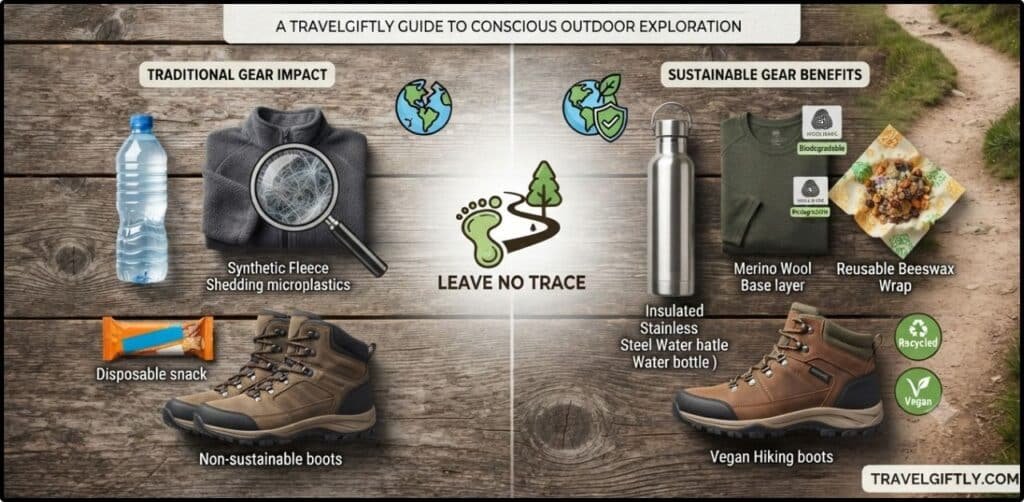
When most people think of outdoor pollution they immediately picture plastic water bottles or candy wrappers left carelessly behind at scenic overlooks. However, the environmental footprint of hiking begins long before you ever hit the trailhead. Conventional outdoor apparel and hardware often shed thousands of microscopic plastic fibers during routine washing utilize persistent chemical treatments known as PFAS for water repellency, and depend heavily on non renewable fossil fuels for production assembly and global shipping logistics.
Transitioning to sustainable hiking gear changes this dynamic completely. Forward thinking eco conscious outdoor brands are now utilizing recycled ocean plastics organic plant based fibers closed loop manufacturing systems and ethically sourced materials that respect both people and the planet. By investing in durable repairable and eco conscious gear you directly reduce landfill waste support ethical manufacturing standards and minimize your overall carbon footprint. Furthermore sustainable gear is purposefully built with longevity in mind meaning you will buy less often save significant money over time and enjoy superior reliable performance that respects the natural world.
Core Categories of Eco-Friendly Hiking Gear
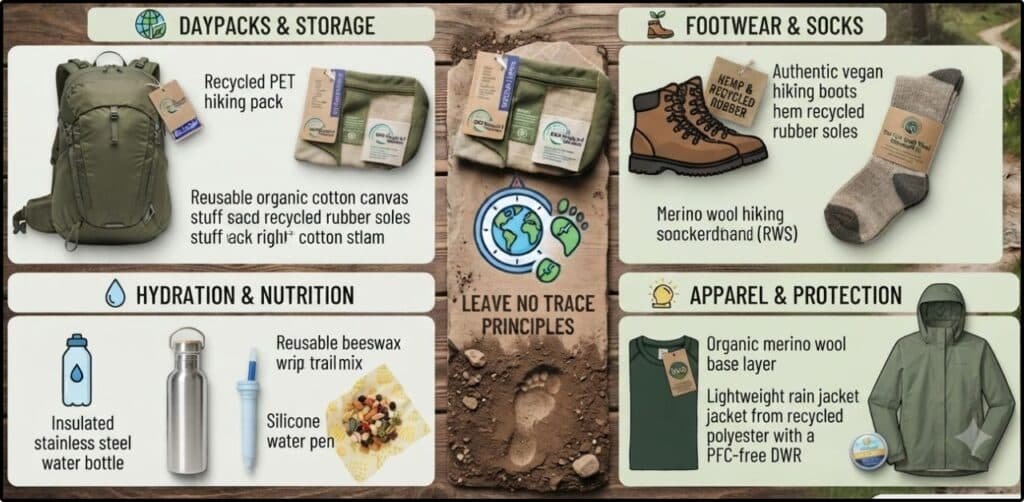
Building your beginner gear collection requires a balanced thoughtful approach focusing on durability weight comfort and verified environmental impact. The essential categories of trail gear can be broken down into foundational equipment that keeps you safe comfortable and well hydrated throughout your entire wilderness journey.
Table 1: Essential Beginner Hiking Gear Overview
| Gear Category | Traditional Material Concern | Sustainable Alternative | Key Environmental Benefit |
| Daypacks | Virgin Polyester / Nylon | Recycled PET / Bluesign Certified | Diverts plastic waste from landfills and oceans |
| Footwear | Synthetic Blends / Toxic Glues | Vegan Materials / Recycled Rubber | Lowers carbon emissions and eliminates animal byproduct waste |
| Hydration | Single-Use Plastics / Treated Metals | Insulated Stainless Steel / Glass | Eliminates single-use bottle consumption entirely |
| Apparel | Conventional Cotton / Virgin Fleece | Organic Cotton / Tencel / Recycled Wool | Conserves water and eliminates harmful pesticide runoff |
1. Eco-Friendly Hiking Packs and Storage
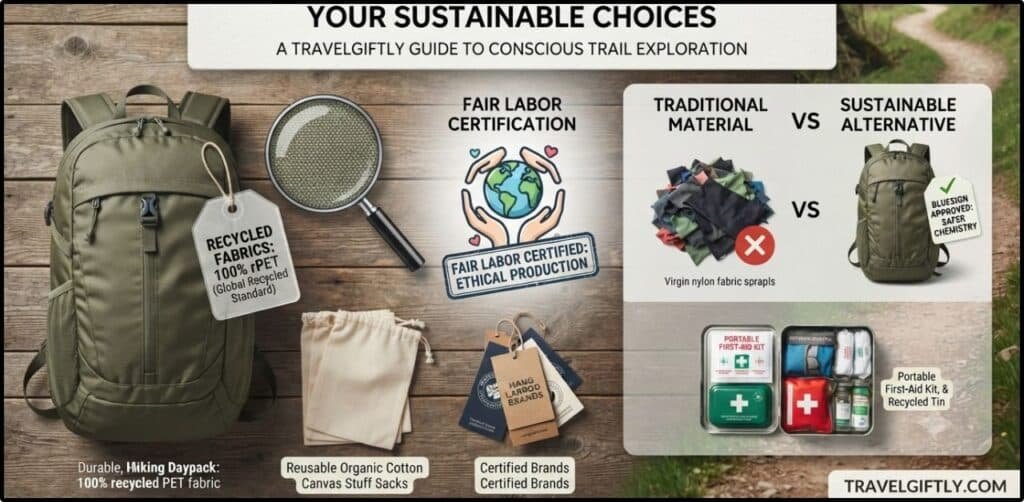
Your backpack acts as your mobile home out on the trail. It needs to comfortably carry your water supply protective layers emergency first aid supplies and nutrition for hours on end without causing strain. Unfortunately conventional packs are packed with virgin synthetics that require heavy petroleum extraction and refining processes.
Choosing a Sustainable Daypack
When selecting your very first hiking pack, look for brands certified by Bluesign or made from 100% recycled post consumer polyethylene terephthalate (rPET). These innovative packs take discarded plastic bottles and spin them into durable weather resistant fibers that match the strength of traditional nylon without carrying the heavy extraction footprint.
Key Features to Look For:
- Recycled Fabrics: Check product labels for heavy duty recycled ripstop nylon that resists tears abrasions and harsh weather conditions.
- Modular Design: Packs featuring easily repairable zippers and replaceable straps extend product lifecycles significantly keeping bags out of landfills.
- Fair Labor Certification: Ensure the manufacturing facility pays fair living wages and maintains safe ethical working conditions for all workers.
2. Sustainable Trail Footwear and Socks
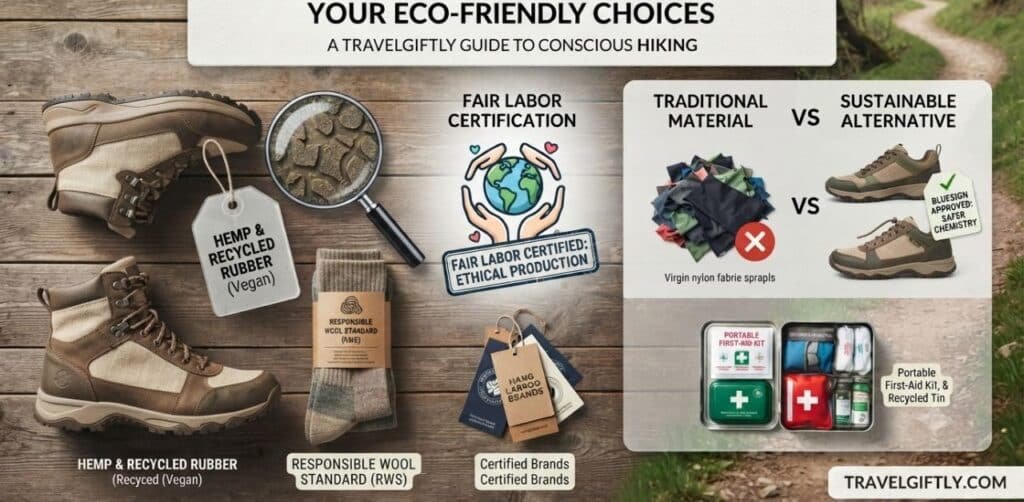
Your feet are undeniably your most valuable assets on any hike. Protecting them while keeping your environmental impact low requires careful consideration as footwear is notoriously difficult to recycle due to mixed material construction and heavy chemical adhesives.
Navigating Eco-Friendly Boots and Trail Shoes
Look for footwear brands utilizing bio based foams recycled rubber outsoles and responsibly sourced leather certified strictly by the Leather Working Group. Many innovative companies are now producing incredible vegan hiking shoes crafted from durable hemp organic cotton and recycled algae biomass harvested from polluted waterways to actively restore ecological balance.
Table 2: Footwear Material Comparison
| Material Type | Sustainability Rating | Durability | Breathability |
| Recycled Rubber & Algae | High | Excellent | Moderate |
| Hemp Canvas | Very High | High | Maximum |
| Conventional Synthetic Mesh | Low | Moderate | High |
| Virgin Leather | Low-Moderate | Maximum | Low |
3. Hydration Systems and Zero-Waste Trail Nutrition
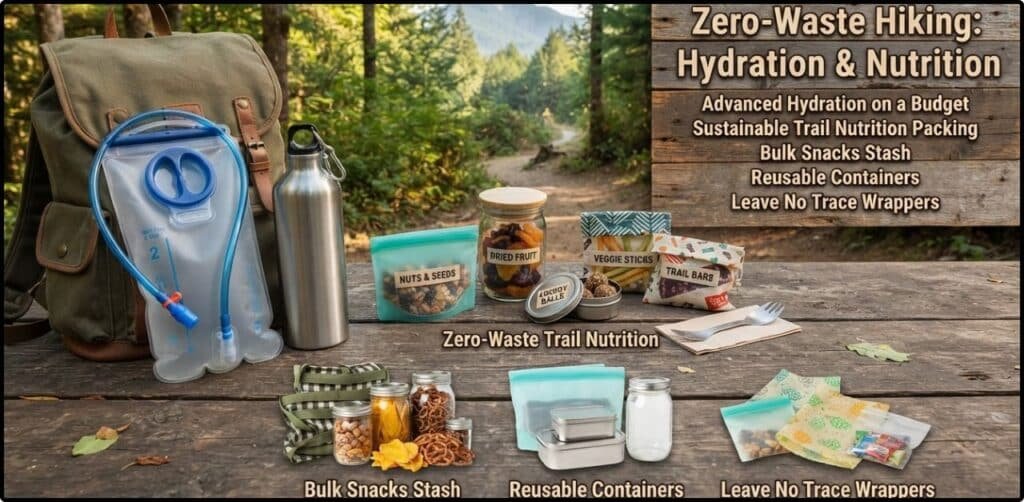
Staying properly hydrated is absolutely non negotiable on a hike but single use plastic water bottles and single serving snack wrappers have no place on a pristine mountain trail.
Advanced Hydration on a Budget
Equip yourself with a double walled insulated stainless steel water bottle or a lightweight collapsible silicone flask. If you are hiking in remote areas with natural freshwater sources pair your bottle with a portable UV purifier or a hollow fiber squeeze filter. This setup allows you to treat natural water on the fly, eliminating the need to pack heavy water volumes or purchase single use plastics at trailhead convenience shops.
Sustainable Trail Nutrition Packing
- Bulk Snacks: Buy nuts dried fruit and trail mix in large quantities using reusable organic cotton produce bags.
- Stash Containers: Use lightweight stainless steel bento boxes or flexible silicone pouches for sandwiches fresh fruit and energy bars.
- Leave No Trace Wrappers: Never unpack single use plastic wrappers on the trail prep your food at home into secure reusable containers.
4. Eco-Friendly Apparel and Weather Protection
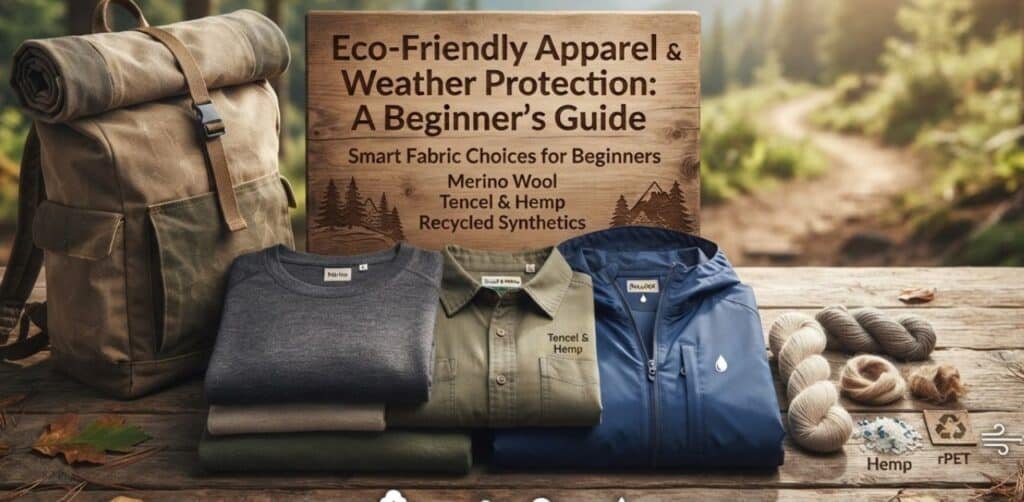
What you wear directly affects your thermal regulation and overall comfort level. Traditional synthetic fleeces shed thousands of microscopic plastic microfibers into washing machine wastewater which eventually makes its way into rivers lakes and oceans.
Smart Fabric Choices for Beginners
- Merino Wool: Naturally odor-resistant temperature regulating and completely biodegradable. Ensure you purchase wool certified by the Responsible Wool Standard (RWS) to guarantee high standards of animal welfare.
- Tencel and Hemp: Excellent for warm weather hiking shirts and lightweight pants. These resilient plant fibers require a fraction of the water that conventional cotton demands.
- Recycled Synthetics: If you need a reliable waterproof rain jacket opt for shells made from recycled polyester treated with PFC free durable water repellent (DWR) coatings.
5. Trail Safety Navigation and Leave No Trace Gear
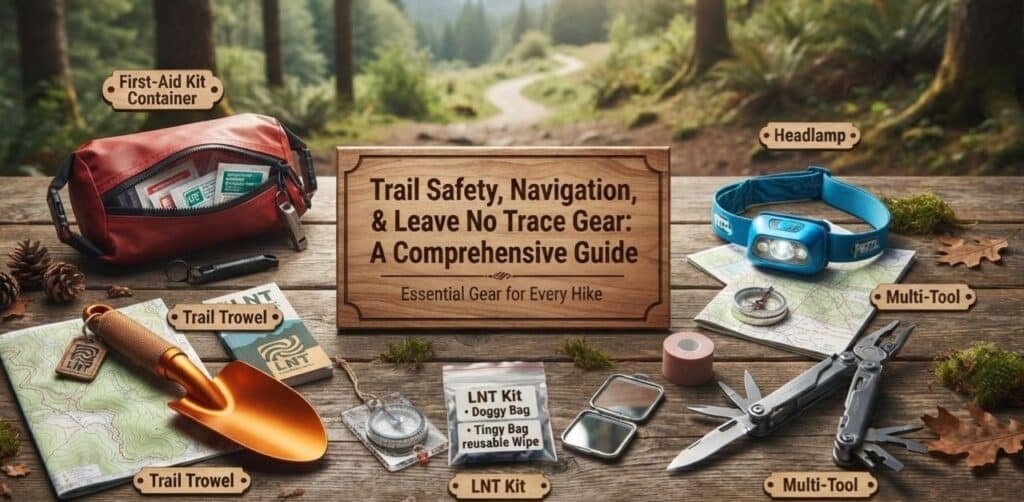
Being a beginner hiker means prioritizing safety without compromising environmental ethics. Having the right accessory gear ensures you are prepared for unexpected weather or minor emergencies without generating unnecessary waste.
Table 3: Essential Eco-Friendly Trail Accessories
| Accessory | Sustainable Material | Purpose |
| First-Aid Kit Container | Tin Metal or Recycled Canvas | Organizes medical supplies safely |
| Trail Trowel | Recycled Ocean Plastic or Bamboo | Used for responsible backcountry waste disposal |
| Headlamp | Rechargeable USB-C with Recycled Housing | Navigates low-light conditions without disposable batteries |
| Multi-Tool | Upcycled Stainless Steel | Handles minor gear repairs on the go |
6. How to Maintain and Repair Your Hiking Gear
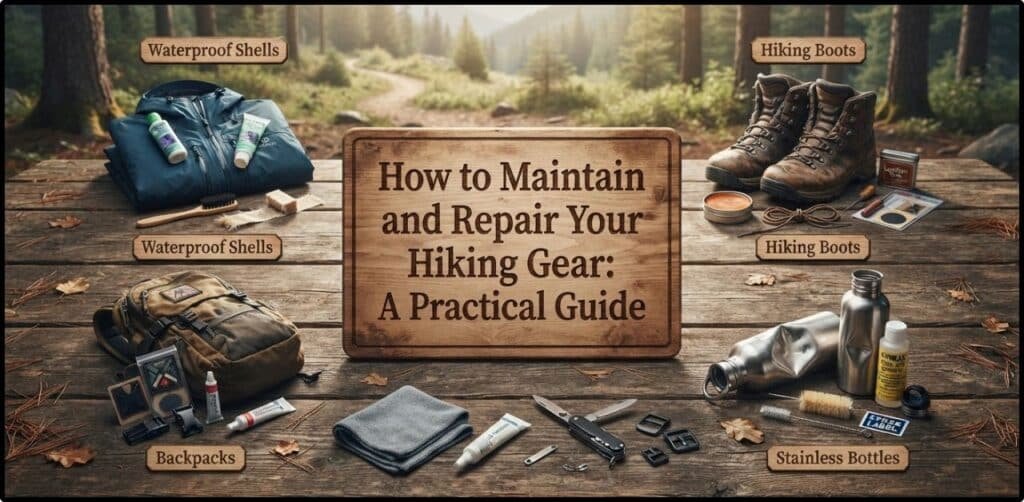
The most sustainable piece of gear in existence is the one you already own. Proper maintenance extends the life of your equipment improves long term performance and keeps valuable items out of crowded landfills.
Table 4: Gear Maintenance Best Practices
| Gear Type | Maintenance Action | Environmental Impact |
| Waterproof Shells | Wash with eco-detergent and re-apply PFC-free DWR spray | Restores performance and doubles jacket lifespan |
| Hiking Boots | Clean mud off after every hike and condition leather | Prevents premature material breakdown and rotting |
| Backpacks | Hand wash with mild soap and air dry | Protects zippers and fabric integrity for years |
| Stainless Bottles | Sanitize regularly with baking soda and hot water | Eliminates odors and prevents replacement purchases |
Frequently Asked Questions
- Is eco-friendly hiking gear more expensive than traditional gear?
While some specialized sustainable brands carry a higher upfront cost due to ethical labor and certified organic materials they are built for superior durability saving you money over time because you replace them less frequently. - Can I hike without buying brand-new specialized eco-gear?
Absolutely The absolute most sustainable gear is secondhand gear. Check local outdoor gear consignment shops online marketplaces or borrow items from experienced hiking friends for your first few trips. - What should I do if I find trash left by other hikers?
Practice the core Leave No Trace philosophy by packing out what you find. Keep a dedicated small trash bag in your daypack specifically to collect litter left behind by less mindful visitors. - Are biodegradable wet wipes safe to leave in the woods?
No. Most biodegradable wipes take months or years to break down in cold soil and attract scavengers. Always pack out all hygiene products using a dedicated odor proof zip pouch. - How do I wash my fleece without shedding microplastics?
Wash your synthetic layers inside a specialized microfiber catching laundry bag such as a Guppyfriend bag or use an external washing machine filter to trap stray fibers. - Is organic cotton good for strenuous hiking?
Organic cotton is fantastic for casual day hikes in dry weather but for high intensity or wet hikes it retains moisture and can cause chafing. Opt for merino wool or recycled synthetics for rigorous trails. - How do I know if an outdoor brand is truly sustainable or greenwashing?
Look for verifiable third-party certifications like Bluesign Fair Trade Certified B Corporation B Corp and Global Recycled Standard (GRS) rather than vague marketing terms like eco-friendly. - What is the best way to filter water safely without chemicals?
Hollow fiber membrane filters like squeeze filters or portable UV light purifiers clear out harmful protozoa and bacteria effectively without relying on chemical chlorine tablets. - How can I dispose of old hiking boots sustainably?
Many modern footwear brands offer recycling take back programs. Alternatively local animal shelters or donation centers will gladly accept gently used boots. - Do bamboo utensils really make a difference on hikes?
Yes Replacing single use plastic forks and spoons with a lightweight bamboo cutlery set prevents countless disposable plastic items from polluting natural recreation sites. - How do I protect local wildlife while hiking?
Keep a respectful distance from all wild animals never feed wildlife human food and store your trail snacks securely to prevent habituation. - What is the single most important rule of beginner eco-hiking?
Always adhere strictly to the Leave No Trace principles plan ahead travel on durable surfaces dispose of waste properly leave what you find minimize campfire impacts and respect wildlife.
Conclusion
Embarking on your hiking journey as a beginner is an empowering life changing step toward cultivating a deeper more meaningful connection with the natural world. By making conscious deliberate choices about the equipment you pack you ensure that the breathtaking outdoor trails you love remain pristine vibrant and fully protected for future generations to explore. Remember that sustainability is a continuous journey rather than a single destination start with the foundational essentials care for your gear diligently and leave every single trail better than you found it.
Author Note
Written by Nabila Founder of TravelGiftly. Passionate about promoting sustainable tourism eco-conscious travel habits and zero waste outdoor adventures across the globe.