
When returning home from an unforgettable journey the urge to bring back physical tokens of your adventure is entirely natural. For generations travelers have loaded their suitcases with plastic keychains miniature ceramic landmarks snow globes and mass produced trinkets. While these souvenirs seem charming at the moment of purchase they frequently end up tucked away in dusty drawers forgotten in storage boxes or thrown straight into the trash. This creates a cycle of mindless consumption and clutter that directly contradicts the beauty of exploring our natural world.
For modern travelers committed to eco friendly habits redefining how we collect memories is essential. Sustainable travel isn’t just about reducing your carbon footprint while moving from destination to destination.it extends to the items you choose to purchase and bring home. By shifting away from disposable items and cheap plastic novelties, you can curate a collection of meaningful ethical and zero waste keepsakes that enrich your daily life without overwhelming your living space. This comprehensive guide explores innovative low impact and clutter free souvenir ideas that honor local cultures support artisan communities and leave zero negative environmental impact.
The Hidden Environmental Cost of Traditional Souvenirs
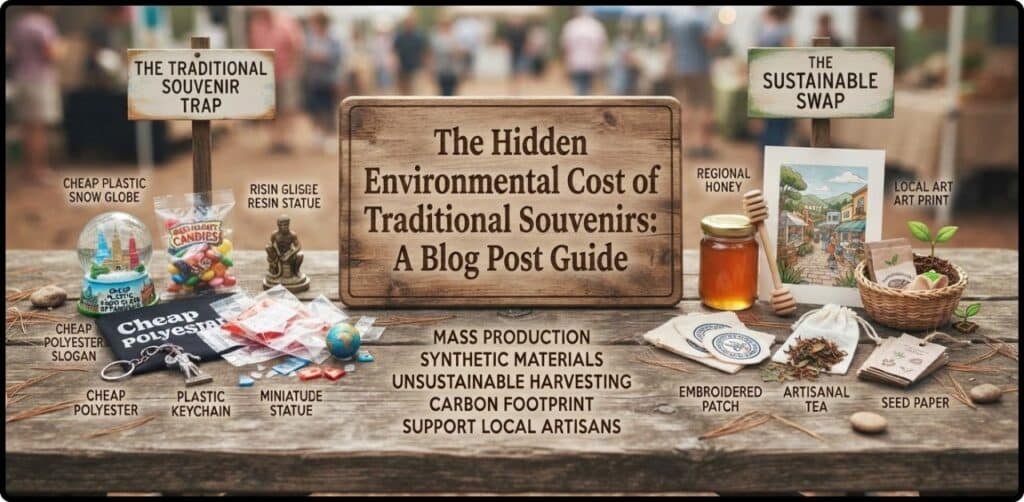
The global souvenir industry relies heavily on mass production cheap labor and synthetic materials. Millions of plastic trinkets are manufactured in factories shipped across oceans using heavy fossil fuels and sold in tourist traps. Once purchased their lifespan is remarkably short.
Furthermore many traditional souvenirs are harvested unsustainably from local ecosystems. Buying items made from endangered shells coral protected hardwoods or poached animal products directly harms local biodiversity and destroys fragile habitats. Choosing sustainable alternatives ensures your travel spending supports local economies positively rather than contributing to environmental degradation.
Core Categories of Clutter Free Eco-Friendly Souvenirs
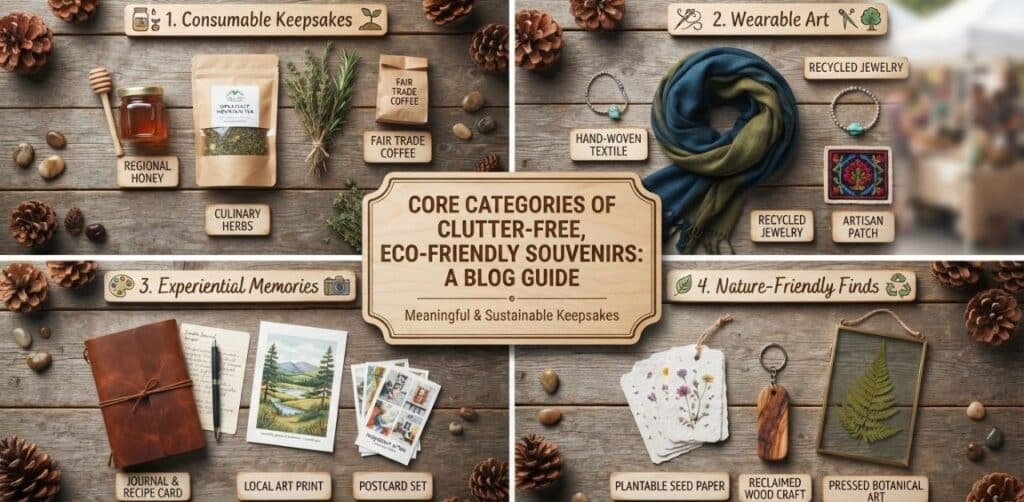
Finding items that capture the essence of a culture without creating physical clutter requires a thoughtful approach. The ideal sustainable souvenir serves a practical purpose is consumed entirely or exists purely in a digital or experiential format.
Table 1: Traditional Souvenirs vs. Sustainable Clutter-Free Alternatives
| Souvenir Category | Traditional Clutter Item | Sustainable Clutter-Free Alternative | Primary Environmental Benefit |
| Consumables | Plastic-packaged local candies | Artisanal spices, local teas, or coffee beans | Zero waste packaging, supports local organic farmers |
| Wearables | Mass-produced polyester shirts | Hand-loomed organic scarves or artisan jewelry | Biodegradable, preserves heritage craftsmanship |
| Experiences | Plastic knick-knacks and statues | Cooking class recipes, local guided workshop items | Eliminates material waste entirely, high personal value |
| Digital/Paper | Paper brochures and cheap postcards | Pressed flowers, digital photo journals, local art prints | Minimal physical footprint, supports independent creators |
1. Consumable and Taste Based Keepsakes
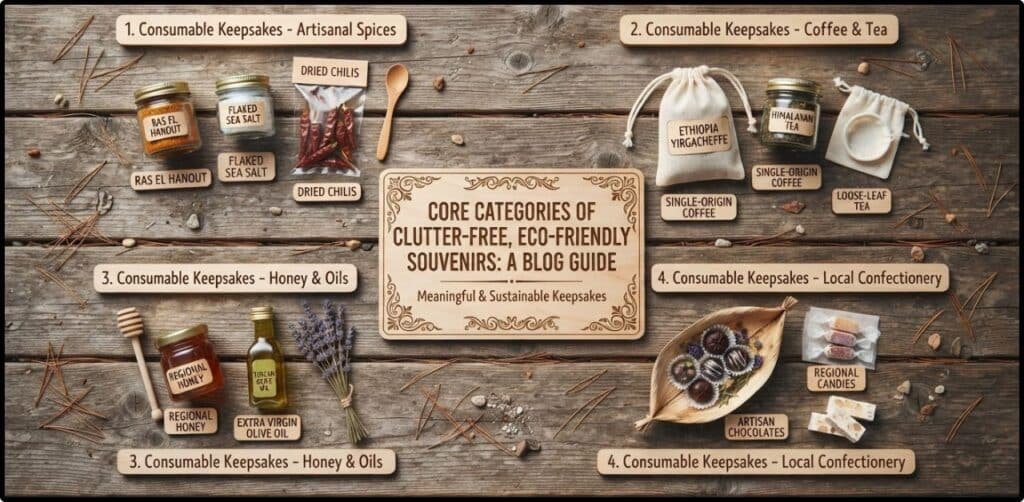
One of the absolute best ways to experience a new culture is through its flavors. Food and drink souvenirs offer a sensory trip back to your destination every time you use them in your kitchen and best of all they leave zero physical clutter behind because they get consumed.
- Artisanal Spices and Blends: Pick up locally grown spices curry powders or regional salt flakes packaged in glass or paper. They take up minimal luggage space and elevate your home cooking.
- Single Origin Coffee or Tea: Visit local independent roasters or tea estates. Purchasing small batch ethically sourced coffee beans or loose leaf teas supports fair trade practices.
- Regional Honey and Olive Oils: Small jars of local honey or bottles of regional olive oil capture the exact terroir of the landscape you visited.
- Local Confectionery: Look for handmade dark chocolates infused with local botanicals traditional candies wrapped in biodegradable wax paper or local dried fruits bought unpackaged at open air markets.
2. Wearable Textures and Artisanal Textiles
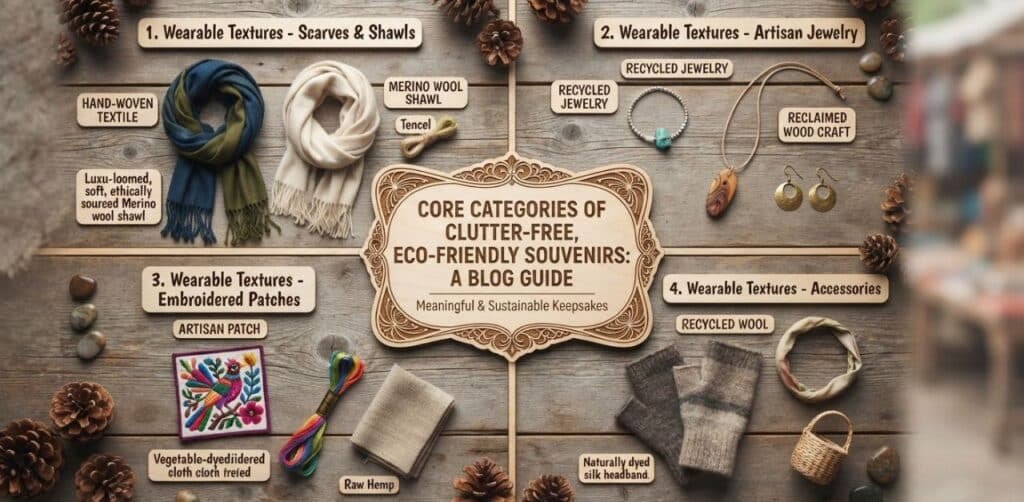
Clothing and textiles carry the rich history of traditional weaving techniques passed down through generations. Instead of buying cheap slogan t shirts made from synthetic polyester invest in timeless high quality wearable art.
- Hand Woven Scarves and Shawls: Look for items crafted from natural organic fibers like linen hemp organic cotton or ethically sourced wool. They are lightweight functional and deeply tied to regional craftsmanship.
- Handmade Artisan Jewelry: Choose small delicate pieces made from recycled metals ethically mined local stones or natural seeds and wood crafted by indigenous artisans.
- Traditional Hand Embroidered Patches: If you love collecting tokens to show off your travels buy small embroidered cloth patches. Instead of sitting on a shelf they can be stitched onto your travel backpack or denim jacket.
3. Experiential and Skill Based Memories
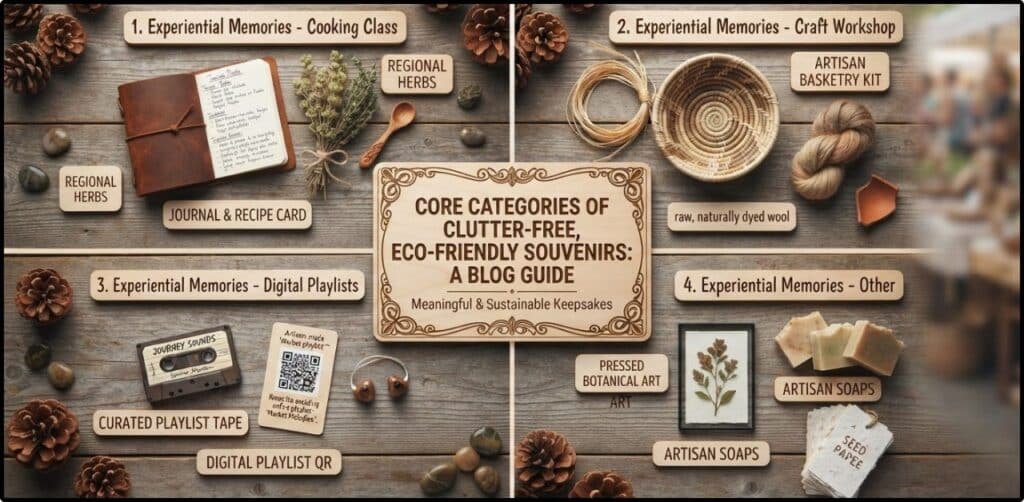
The most valuable souvenir you can ever bring home is not an object at all it is a new skill a recipe or a memory locked permanently in your mind.
- Take a Local Cooking Class: Learn how to make authentic regional dishes from a local chef. Bringing home a handwritten recipe card allows you to recreate the culture in your own kitchen for years to come.
- Learn a Traditional Craft: Participate in a pottery weaving or woodworking workshop led by local artisans. The piece you create yourself carries unmatched sentimental weight.
- Curated Digital Playlists: Record ambient sounds of bustling local markets ocean waves or mountain wind and collect local independent music tracks to compile a custom travel soundtrack.
4. Nature Friendly and Flat Paper Artifacts
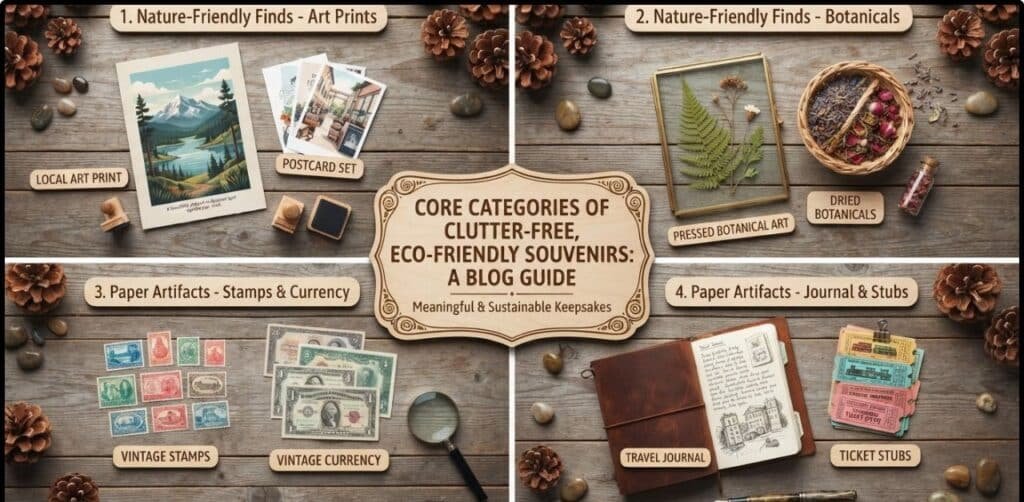
If you prefer physical items that can be displayed or stored easily without taking up living space flat paper goods and natural items offer elegant solutions.
- Local Fine Art Prints: Support independent street artists and illustrators by purchasing small unframed prints or linocuts. They slip flat into your luggage and can be framed at home using secondhand frames.
- Pressed Botanical Specimens: Collect fallen leaves flower petals or interesting grasses during a hike and press them gently inside the pages of a notebook.
- Vintage Postage Stamps and Currency: Collect obsolete local banknotes or colorful vintage postage stamps from local antique shops. They are tiny historic and look stunning framed in a minimalist collage.
- Journal Entries and Ticket Stubs: Keep a dedicated travel journal where you write daily reflections glue museum tickets and map out your emotional journey across the landscape.
Table 2: Practical Packing and Selection Matrix for Low-Impact Souvenirs
| Souvenir Type | Luggage Weight Impact | Fragility Level | Long-Term Storage Requirement |
| Spices & Tea | Very Low | Low | Airtight pantry storage |
| Textiles & Scarves | Negligible | None | Folded in clothing drawer |
| Art Prints | Negligible | Low (requires flat packing) | Flat portfolio or picture frame |
| Pressed Botanicals | None | High | Kept inside a journal or book |
Sustainable Gifting: Bringing Eco Friendly Souvenirs to Friends and Family
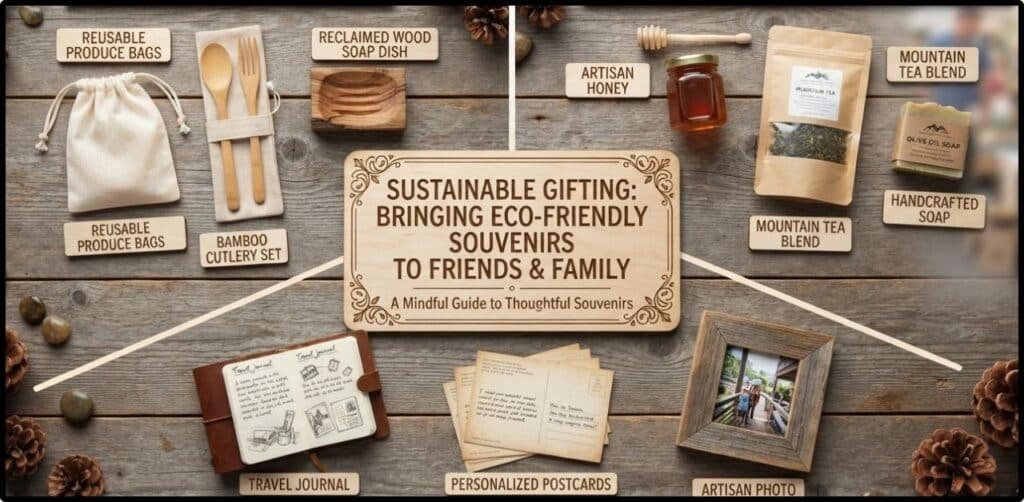
When buying gifts for loved ones back home the temptation to buy generic souvenirs multiplies. To avoid contributing to the global gift shop clutter cycle apply the same thoughtful criteria to gifts:
- Focus on Utility: Give gifts that people actually use daily such as reusable beeswax wraps bamboo travel utensils or organic soaps made by local makers.
- Share Regional Treats: Edible gifts are universally loved and never add unwanted clutter to a friend’s apartment.
- Tell the Story: When handing over a gift share the background story of the artisan who made it or the market where you found it. This deepens the emotional connection of the gift.
Table 3: Common Souvenir Traps vs. Smart Sustainable Swaps
| The Trap (What to Avoid) | The Smart Swap (What to Buy Instead) | Why It Matters |
| Plastic snow globes | Glass jar of local preserves | Avoids non-biodegradable plastics and microplastics |
| Cheap factory-made trinkets | Hand-carved wooden kitchen spoon | Supports local heritage craft instead of mass production |
| Synthetic slogan t-shirts | Locally woven linen or cotton scarf | Reduces microplastic shedding during laundry cycles |
| Shells or coral from the beach | Illustrated local art print or postcard | Preserves local marine ecosystems and coastal integrity |
How to Avoid Greenwashing While Shopping Abroad

In recent years souvenir markets have become flooded with items marketed as eco friendly natural or authentic handmade. when they are actually mass produced imports disguised as local crafts. To ensure your purchasing choices align with true sustainability keep these quick tips in mind:
- Ask Questions: Inquire where the materials were sourced and who made the item. True artisans are usually thrilled to share their creative process.
- Inspect the Quality: Handmade items naturally feature minor variations and unique imperfections whereas mass produced items look identical.
- Look for Cooperatives: Buy directly from certified fair trade cooperatives women’s weaving collectives or communityled artisan markets.
Table 4: Evaluating Ethical Artisan Souvenirs
| Evaluation Criteria | What to Look For | Red Flags to Avoid |
| Source Transparency | Direct connection to the maker or cooperative | Vague labels like “imported” or generic factory tags |
| Material Origin | Locally sourced organic wool, clay, wood, or stone | Cheap plastics, synthetic resin, or endangered species products |
| Pricing Fairness | Prices that reflect fair labor and living wages | Extraneously cheap prices suggesting exploitative sweatshop labor |
| Packaging Style | Minimal, reusable, or zero plastic wrapping | Excessive single-use bubble wrap and plastic bags |
Frequently Asked Questions
What are the best souvenirs for minimalist travelers?
Consumable goods like local coffee beans artisan teas regional spices or digital memories like high resolution photography collections are ideal for minimalists because they take up zero permanent space.
Are postcards sustainable souvenirs?
Yes traditional paper postcards are biodegradable and lightweight. However, you can make them even more sustainable by choosing prints made from recycled post consumer paper or certified wood free paper stock.
How can I pack fragile food souvenirs safely without plastic bubble wrap?
Instead of using single use plastic bubble wrap wrap glass jars or delicate ceramics tightly inside your own clothing items such as woolen socks thick sweaters or soft scarves already packed in your luggage.
Is it legal to bring natural items like seeds or flowers across international borders?
It depends entirely on local agricultural and customs laws. Always declare biological items to customs officials to protect local ecosystems from invasive species and foreign plant diseases.
How do I support indigenous artisans directly?
Seek out official artisan cooperatives cultural heritage centers or community run markets rather than buying souvenirs from airport gift shops where profits rarely reach the actual creators.
What should I do if I receive unwanted clutter souvenirs from friends?
Express gratitude for the thought behind the gesture and if the item truly has no use or sentimental value for you consider donating it to a local charity shop or upcycling it creatively.
Can digital photography completely replace physical souvenirs?
For many travelers a curated professionally printed photo book or digital journal offers a richer storytelling experience than physical knick knacks while eliminating manufacturing waste entirely.
How do I identify genuine local crafts versus mass-produced imports?
Look for regional design patterns talk directly to the vendor about their materials and check for minor handmade imperfections that prove local craftsmanship.
Are natural stones or sand acceptable souvenirs to pick up from nature?
As a general rule under Leave No Trace ethics you should leave natural objects including rocks sand shells and feathers exactly where you find them to maintain natural ecosystem balance.
What is the most eco-friendly packaging to request for delicate gifts?
Ask for plain paper wrapping folded newspaper or simply place items directly into your own reusable cloth tote bag without accepting plastic bags or synthetic ribbons.
How can I make my travel journaling more engaging?
Incorporate everyday trail ephemera like pressed wildflowers local train tickets café receipts and handwritten date stamps alongside your written reflections and sketches.
Why do mass-produced souvenirs harm local economies?
When tourists buy cheap imported souvenirs made in foreign factories local artisans lose income and profits flow away from the local community into large corporate supply chains.
Conclusion
Embracing sustainable travel means looking at every single aspect of our journeys with mindful intention including the physical tokens we choose to bring home. By replacing disposable plastic trinkets and mindless clutter with consumable local flavors rich textile art experiential memories and flat paper keepsakes you honor the cultures you visit while protecting the planet. True travel memories live vibrantly within your mind your skills and your stories leaving the earth just as pristine as you found it for generations of explorers to come.
Author Note
Written by Nabila founder of TravelGiftly. Deeply passionate about promoting sustainable tourism ethical travel habits and zero waste outdoor adventures across the globe.